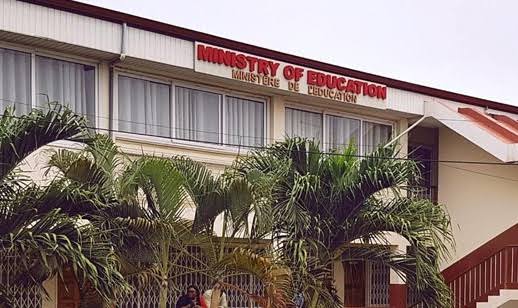
The Ministry of Education will this week present a revised curriculum for kindergarten to junior high school that introduces coding, artificial intelligence (AI), electronics and expanded STEM education as part of the government’s efforts to prepare learners for a modern knowledge-based economy.
Education Minister Haruna Iddrisu announced the move on Monday during the Government Accountability Series, describing the curriculum reform as one of the most significant education policy decisions under President John Dramani Mahama’s Reset Agenda.
According to the minister, the revised curriculum will be formally presented to the Ministry on Wednesday before being submitted to President Mahama for onward consideration by Cabinet and Parliament.
“The revision of our curriculum is to ensure a smart start curriculum for greater integration of technology, science, engineering and mathematics. We have promised to introduce coding, electronics, artificial intelligence and TVET into the basic education curriculum,” Mr Iddrisu said.
He added that ethics, patriotism and civic responsibility would also become integral components of the revised curriculum to help instil values and responsible citizenship among learners.
The minister said the reforms form part of broader efforts to strengthen foundational learning, arguing that Ghana has historically invested more resources in secondary education than basic education.
“Every country gets it right if it invests in this foundational learning system because that is where literacy, numeracy, critical thinking and problem-solving are learned,” he noted.
Beyond curriculum reforms, Mr Iddrisu outlined several interventions aimed at improving access and inclusivity in education.
He disclosed that the government has allocated GH¢100 million through the Ghana Education Trust Fund (GETFund) to implement free education for learners with special needs and disabilities.
The funding will support the procurement of assistive devices, rehabilitation of selected special schools, and implementation of inclusive education policies.
The minister also announced that the government has distributed 12.2 million sanitary pads to about 2.5 million female students nationwide to reduce absenteeism linked to menstrual hygiene challenges.
In addition, he said the feeding grant for learners with special needs has been increased from GH¢8 to GH¢15 per student.
Mr Iddrisu stressed that the ministry’s reforms are guided by evidence-based policymaking and are intended to ensure Ghana’s education system produces graduates capable of competing globally while contributing meaningfully to national development.