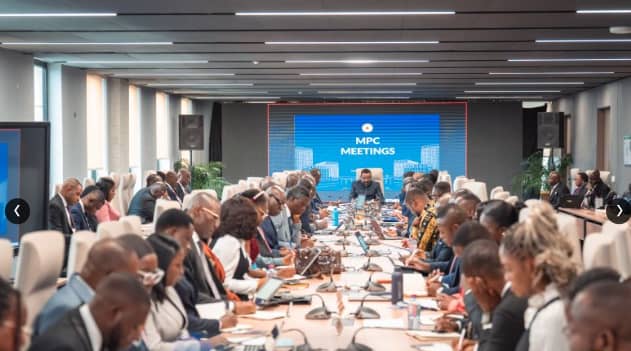
The Bank of Ghana has signalled that assessing the recent rise in inflation and its implications for monetary policy will be the central focus of deliberations at its 131st Monetary Policy Committee (MPC) meeting, as policymakers weigh domestic economic resilience against growing global uncertainties.
Opening the meeting on Monday, Governor Dr Johnson Pandit Asiama said the Committee would determine whether the recent increase in inflation represents a temporary adjustment driven by external shocks or the beginning of a more persistent trend that could influence inflation expectations.
Headline inflation has increased for three consecutive months, rising from 3.2 percent in March to 5.3 percent in June, largely due to higher transport and haulage costs.
Despite the increase, inflation remains below the Bank’s target range of 8 percent, plus or minus two percentage points, and significantly lower than the 13.7 percent recorded a year ago.
“The prolonged disinflation phase has ended, and inflation is now returning towards the target band. Whether that return reflects orderly normalisation, or the beginning of a more persistent change in the outlook, is the central question for this meeting,” the Governor said.
The Governor noted that global developments have become more uncertain following renewed hostilities around the Strait of Hormuz, which have pushed Brent crude oil prices above US$85 per barrel.
He said the renewed volatility in energy markets could create additional imported inflationary pressures for Ghana, which is both a commodity exporter and an energy importer.
Dr Asiama said the Committee would also evaluate the effectiveness of measures introduced at its previous meeting, including maintaining the Monetary Policy Rate at 14 percent and replacing the dynamic Cash Reserve Ratio framework with a uniform 20 percent reserve requirement to be held in domestic currency.
In addition, the MPC will assess the implications of the Bank’s decision to discontinue prefinancing gold purchases by the Ghana Gold Board through its auction arrangements from July 1.
According to the Governor, the move represents “an important change in the sources of domestic liquidity” and will be considered alongside the rapid expansion in private sector credit.
The Governor pointed to generally favourable domestic economic conditions, noting that Ghana’s economy expanded by 6.4 percent in the first quarter of 2026, compared with 6.2 percent during the same period last year.
Although the banking sector remains well-capitalised, Dr Asiama observed that non-performing loans remain elevated, suggesting that credit risks have not been fully resolved.
The Committee’s deliberations this week will focus on four key issues: the inflation outlook, the effectiveness of the May monetary policy reforms, the changing composition of domestic liquidity following the end of GoldBod prefinancing, and the impact of renewed volatility in global oil markets on Ghana’s external position.
“Our task this week is not simply to assess the latest data. It is to determine whether the framework we strengthened in May remains fit for the conditions now before us, and whether the choices we made then continue to serve the medium-term objectives on which our credibility depends,” Dr Asiama said.
The Governor also announced the launch of the Monetary Policy Committee Educational Observership Programme (MPC-EOP), an initiative that will allow selected students from the University of Ghana to observe aspects of the MPC process.
He said the programme is intended to enhance transparency, strengthen public understanding of monetary policy and build stronger links between academia and the Bank’s policymaking process.