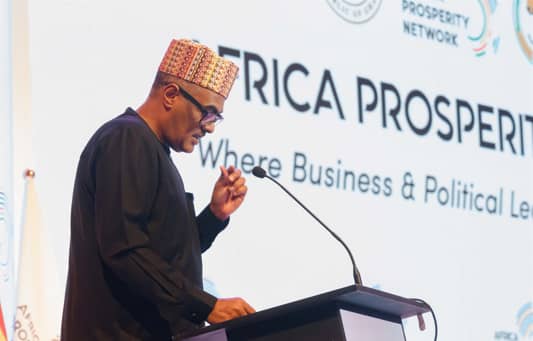
The Chief Executive Officer of the Africa Prosperity Network, Sidig Faroug El Toum, has highlighted the crucial role of small and medium-sized enterprises (SMEs) in Africa, revealing that about 58 percent of SMEs on the continent are owned or run by women.
He made the remarks during the SME Scale-Up Dialogue on the second day of the Africa Prosperity Dialogue (APD) 2026 at the Accra International Conference Centre (AICC). The event brought together policymakers, financiers, entrepreneurs, and youth leaders to discuss practical ways of strengthening Africa’s single market under the African Continental Free Trade Area (AfCFTA).
“Statistics show that approximately 58% of all African SMEs are women owned or operated,” El Toum said, describing women entrepreneurs as central to Africa’s economic growth. He added that young people are also shaping the SME sector, noting that “65% of startup founders are under 30 years,” making youth-driven enterprises a major force in Africa’s trade and development.
El Toum stressed that SMEs are not marginal players but “transformation agents,” accounting for more than 90 percent of businesses and employing the majority of Africa’s workforce. “Today we turn our full attention to an important economic actor who will ultimately determine whether AfCFTA succeeds or fails — Africa’s small and medium enterprises,” he said.
Despite their impact, African SMEs face challenges including limited access to finance, fragmented trade systems, and weak infrastructure. “Yet too often they remain locked out of finance, fragmented by borders and constrained by systems that were not designed with them at all,” he noted.
El Toum emphasised that APD 2026 aims to move beyond discussion to action. “This cannot be a platform for mere discussions. It must serve as a problem-solving space,” he said, highlighting solutions such as scalable financing, interoperable payment systems, value-chain integration, and tools to enable cross-border trade.
He also underscored that Africa’s economic growth cannot rely solely on governments or large corporations. “Development prosperity will not be delivered by government alone… it will be built by competitive African enterprises trading with each other,” he said, urging participants to approach the dialogue with collaboration, boldness, and a focus on lasting commitments.
“Africa’s single market will not implement itself,” El Toum concluded, calling for urgent and practical action to unlock the full potential of women- and youth-led SMEs.