The government will officially roll out its flagship Free Primary Health Care policy on April 15, 2026, in a move aimed at expanding access to essential health services and reducing out-of-pocket costs for Ghanaians.
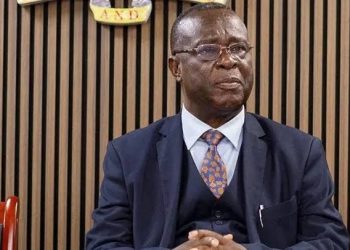
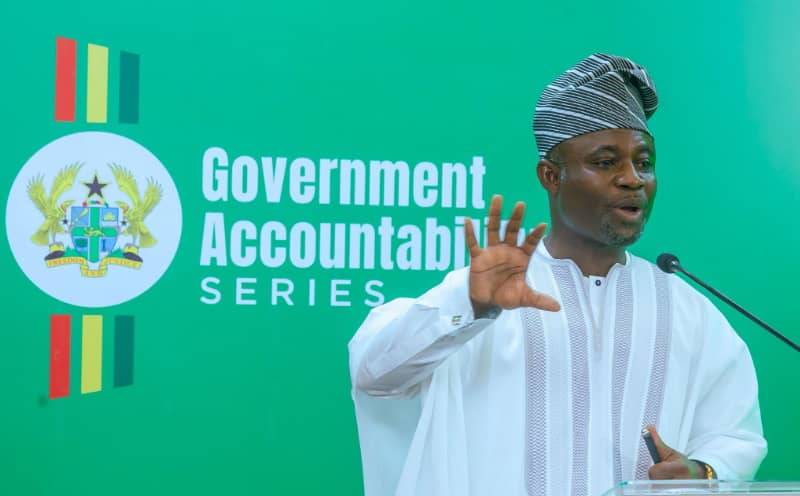
Speaking at the Presidency during an Accountability Series briefing, Health Minister Kwabena Mintah Akandoh described the policy as a major shift in Ghana’s healthcare delivery system—one that prioritises prevention, early detection, and equitable access.
“This is not just about policy, it is about whether a Ghanaian can access care early, easily, and without worrying about cost,” he said.
The initiative, to be launched by President John Dramani Mahama, seeks to address persistent gaps in healthcare accessibility, despite years of reforms under programmes such as the National Health Insurance Scheme (NHIS) and the Community-based Health Planning and Services (CHPS).
According to the minister, Ghana’s universal health coverage index currently stands at about 56%, far below the 80% target set for 2030. He noted that financial barriers remain a major challenge, with only about two-thirds of the population actively enrolled in the NHIS and out-of-pocket payments accounting for nearly one-third of total health expenditure.
“When people have to pay, they delay, they wait, they try to manage symptoms at home, and by the time they come to the facility, the condition often worsens,” he warned.
The Free Primary Health Care policy will guarantee access to a defined package of services at CHPS compounds, health centres, and polyclinics nationwide. These include routine screenings for conditions such as hypertension and diabetes, maternal and child health services, immunisation, treatment of common illnesses, and basic emergency care.
Importantly, the minister stressed: “There will be no cost for the preventive and promotive as well as the curative services within the free primary health care services package. The only thing you need is to show a valid ID card as a Ghanaian.”
However, he clarified that the policy does not replace the NHIS. Patients referred to higher-level facilities such as district or teaching hospitals will still require active NHIS coverage.
Implementation will be phased between 2026 and 2028, beginning with 150 underserved districts before expanding nationwide. The government has already procured over 24,000 pieces of medical equipment to support the rollout, including incubators, glucometers, hospital beds, and ultrasound machines.
The minister described the initiative as a systemic reset: “Free primary health care is not just a policy. It is a reset—towards prevention, equity, and a stronger health system.”