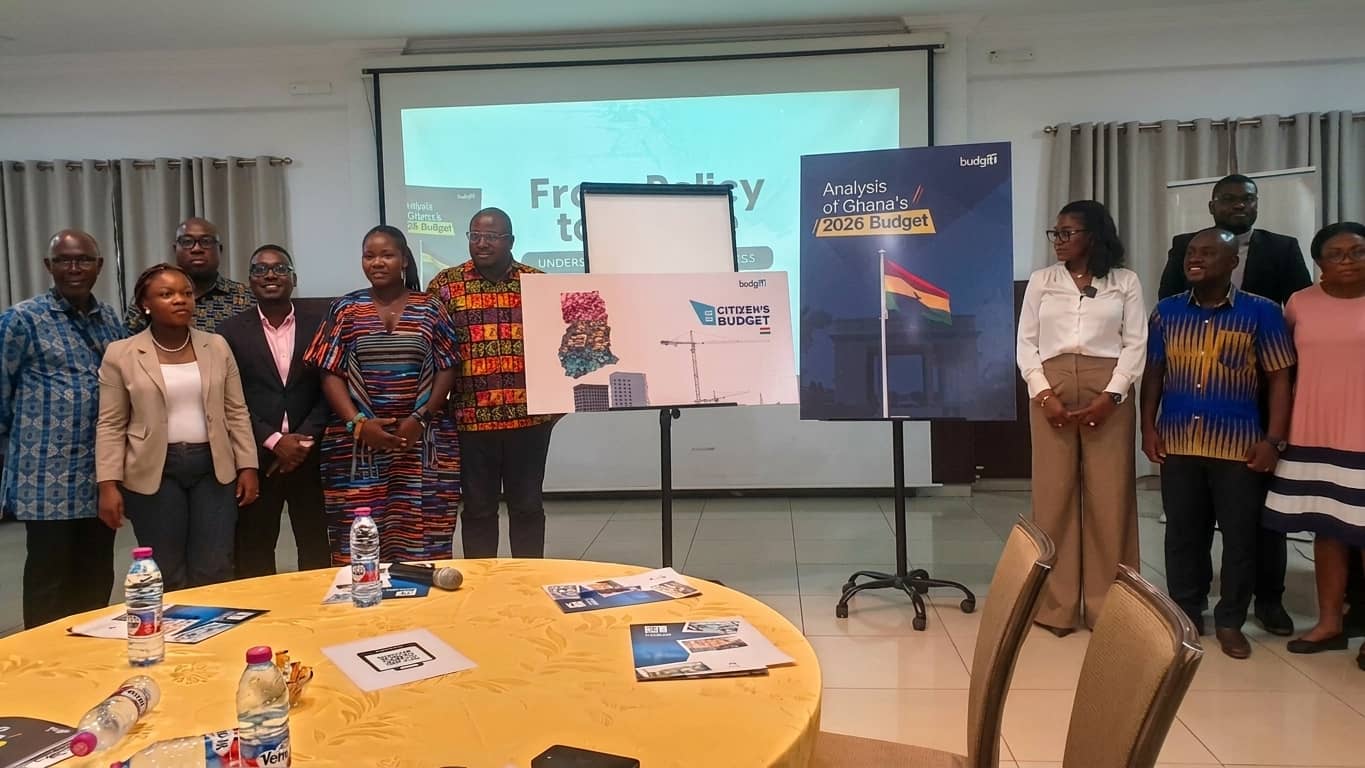
BudgIT Ghana has cautioned that Ghana’s flagship development programmes under the 2026 Budget, particularly the Big Push infrastructure agenda and the 24-Hour Economy initiative, face significant execution, financing and accountability challenges that could undermine their intended impact.
The concerns were outlined in a presentation by Senior Research Officer Hamid Abdel-Mumuni ahead of the organisation’s Simplified 2026 Budget launch and stakeholder engagement scheduled for May 20, 2026, in Accra.
While the government has allocated GH¢30 billion to the Big Push infrastructure programme in 2026, BudgIT Ghana notes that the broader US$10 billion initiative remains largely unfunded, raising questions about the remaining financing structure.
“Only GH¢30bn of the US$10bn Big Push is appropriated in 2026,” the presentation highlights, warning that unclear funding sources for the balance could increase reliance on borrowing or public-private partnerships with long-term fiscal implications.
The Big Push is expected to deliver major infrastructure projects including the Accra–Kumasi Expressway, 50 bridges nationwide, 1,000km of agricultural enclave roads, and transport hubs aimed at boosting trade and reducing regional inequality.
However, BudgIT Ghana warns that Ghana’s historical capital expenditure execution rate — often between 50% and 60% — poses a serious risk to project delivery timelines and the government’s job creation targets.
Similarly, the 24-Hour Economy initiative, designed to expand industrial production through shift-based operations, has been flagged for lacking a dedicated budget line.
“There is no standalone budget for the 24-Hour Economy,” the presentation notes, making it difficult for citizens and oversight institutions to track spending, outputs and employment outcomes.
BudgIT Ghana further cautions that the success of the initiative is heavily dependent on stable electricity supply, noting that persistent energy sector challenges could undermine round-the-clock industrial operations.
The organisation also points to revenue uncertainties, including past oil revenue shortfalls and potential tax collection challenges, which may affect the government’s ability to sustain spending commitments under both programmes.
Despite these concerns, the analysis acknowledges that the initiatives present significant opportunities for structural transformation, including job creation, improved logistics infrastructure, and export diversification.
BudgIT Ghana is therefore calling for stronger transparency measures, including itemised budgeting for all flagship programmes, quarterly publication of capital expenditure performance, and full disclosure of financing arrangements for large-scale infrastructure projects.
The organisation maintains that effective public oversight will be critical to ensuring that the 2026 Budget delivers on its development promises, particularly in infrastructure expansion and youth employment generation.