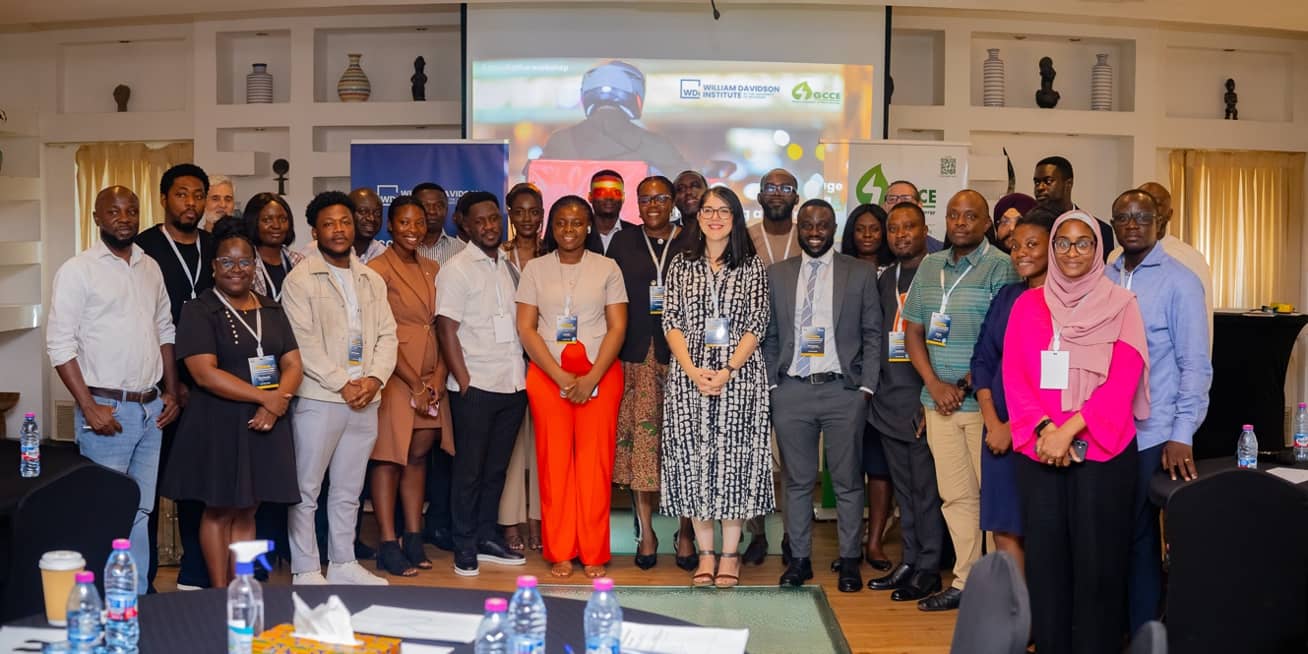
The Ghana Chamber of Clean Energy (GCCE), in partnership with the William Davidson Institute (WDI) at the University of Michigan, USA, has convened a stakeholder consultative workshop in Accra to examine financing constraints facing Ghana’s growing electric two-wheeler manufacturing, assembling and retail businesses.
The workshop, held on Tuesday, October 27, 2026, also explored policy solutions to improve access to capital and support the growth of the electric mobility industry.
The event, organised as part of an ongoing joint research and advocacy initiative by GCCE and WDI, brought together electric two-wheeler enterprises, financial institutions and other key industry stakeholders to validate financing gaps identified by the research team, uncover additional challenges and explore opportunities for collective action.
Delivering the opening remarks, Ms Emmanuella Biney, GCCE Programmes and Outreach Manager, said addressing the sector’s financing challenges required more than increasing the availability of capital.
She said appropriate financing structures, stronger institutional collaboration and an enabling environment were equally important to strengthening investor confidence, improving access to financing and accelerating the adoption of electric two-wheelers in Ghana.
According to her, these efforts would also contribute to cleaner air and a more sustainable transport sector.
Ms Biney further noted that no single institution could address the challenges independently, calling for coordinated action among government and industry stakeholders. She also emphasised the need for government to develop a deeper understanding of the financing constraints and policy gaps identified through GCCE’s industry engagements.
As part of the workshop, the research team presented seven preliminary financing gaps identified through the study.
These included the limited implementation of announced import duty waivers for electric two-wheeler companies; difficulties transitioning from grant funding to follow-on investment; and the reliance of companies on their own balance sheets to finance riders.
Other challenges identified were limited access to affordable local-currency debt, lending requirements that are difficult for early-stage companies to meet, equity investors’ preference for asset-light business models, and persistent information and expectation gaps between enterprises and capital providers.
Participants subsequently engaged in group discussions to validate the identified challenges, highlight additional barriers and propose potential approaches to addressing them.
The discussions also explored opportunities for stronger collaboration among government, financial institutions, electric two-wheeler companies and other industry stakeholders to improve access to financing and support the sector’s growth.
The findings and recommendations from the workshop will inform a forthcoming public report to be jointly developed by GCCE and WDI.
The report is expected to guide GCCE’s engagements with government, financial institutions and industry stakeholders on the policy and financing measures required to address the identified barriers and improve access to capital for electric mobility in Ghana.