Gross capital formation in Ghana surged by 53% in the second quarter of 2026, marking the sharpest acceleration recorded among the expenditure components of Gross Domestic Product (GDP), the Ghana Statistical Service (GSS) has reported.
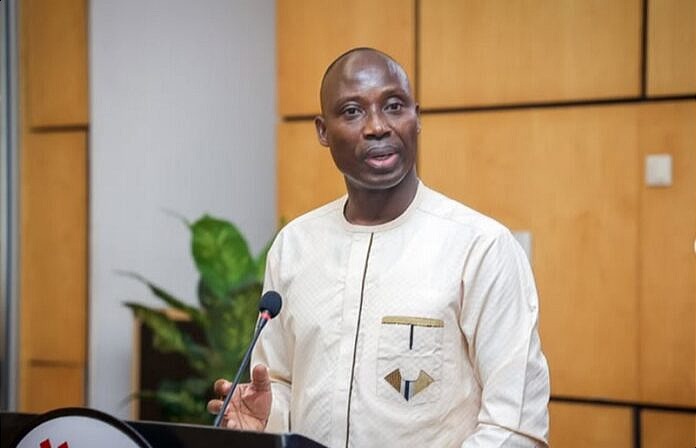
The strong expansion in investment occurred as overall domestic demand grew by 11.2% during the quarter, according to Government Statistician Dr Alhassan Iddrisu, who presented the 2026 second-quarter GDP estimates on Wednesday, September 9.
Dr Iddrisu said the increase in gross capital formation represented a significant acceleration from the 8.6% growth recorded in the same quarter of 2025.
“Within that investment, which is what we usually refer to as gross capital formation, surged 53%, up from 8.6% a year earlier,” he said.
“And that’s the sharpest acceleration anywhere in this release that we have just made,” he added.
The strong investment performance was recorded against a backdrop of continued expansion in Ghana’s economy, which grew by 6% in real terms in the second quarter of 2026.
However, household and other consumption expenditure showed a markedly slower pace of growth. Consumption expanded by 2.1%, compared with 11.5% in the corresponding period of 2025.
The expenditure figures suggest that the second-quarter growth performance was increasingly supported by investment and other components of demand rather than consumption.
Exports also expanded during the quarter, recording growth of 14.2%. Imports, however, grew considerably faster at 29.9%.
“This tells us domestic demand is currently rising faster,” Dr Iddrisu said.
The expenditure-side performance came alongside continued growth across the production side of the economy.
Real GDP increased from GH¢48.4 billion in the second quarter of 2025 to GH¢51.3 billion in the second quarter of 2026, representing 6% real growth.
Nominal GDP, measured at current prices, reached GH¢372.1 billion, up 11.4% from GH¢334.1 billion a year earlier.
Dr Iddrisu cautioned, however, that nominal GDP growth partly reflects price changes and therefore real GDP remains the more appropriate measure of actual changes in economic output.
“The 11.4% jump that I just talked about is partly about higher prices, not the fact that more things were made,” he said. “And that’s why we, like economists everywhere, usually keep our eyes on the real figures rather than the nominal figures.”
The monthly performance of economic activity also strengthened steadily during the second quarter.
According to the Monthly Indicator of Economic Growth (MIEG), economic activity grew by 5.5% year-on-year in April 2026, accelerated to 6% in May and reached 6.5% in June.
The MIEG index itself rose to 116.7 in June 2026, compared with 109.6 a year earlier, representing a 6% increase.
Services recorded the strongest monthly performance in June, growing by 10.8%, while agriculture expanded by 6.4% and industry by 4.7%.
Dr Iddrisu said the steady monthly acceleration provided support for the quarterly GDP estimates.
“This monthly buildup, month after month of acceleration, is exactly what gives us confidence in the quarterly GDP figures I shared earlier,” he said.
The first-half performance also showed that Ghana’s economy continued to expand despite slower growth in some sectors.
Real GDP grew by 6.2% in the first six months of 2026, marginally below the 6.4% recorded during the first half of 2025.
The services sector grew by 7.5% during the period and remained the largest contributor to economic activity, accounting for 52.6% of first-half GDP growth.
Industry, however, recorded stronger growth, expanding by 5.6% compared with 3.3% in the first half of 2025, largely due to the rebound in oil and gas.
Agriculture grew by 3.9%, down from 6.8% a year earlier.
At the same time, economy-wide price pressures eased substantially. The GDP deflator fell from 21.2% in the first half of 2025 to 4.8% in the first half of 2026.
Dr Iddrisu said the combination of sustained economic growth and easing price pressures was significant.