Telecommunications operators in Ghana are accelerating investments in network infrastructure as smartphone penetration rises to 71.8%, placing increased pressure on the country’s digital infrastructure, Minister for Communication, Digital Technology and Innovations Samuel Nartey George has said.
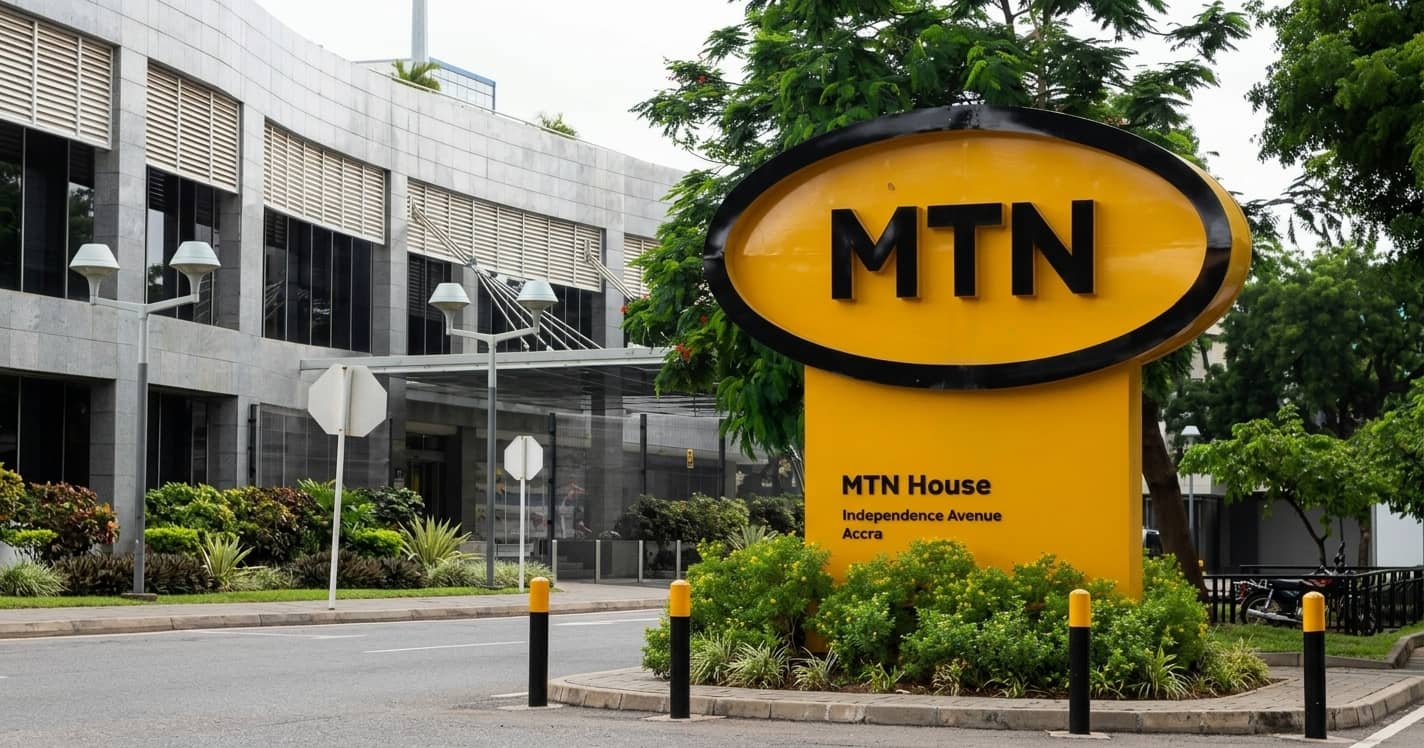
Mr George said MTN Ghana has committed more than US$1.1 billion over the next three years, including about US$380 million in 2026, to expand network coverage, deploy new sites and support the rollout of 5G services.
He said MTN is building 800 new sites this year, significantly above the average of 209 new sites constructed annually over the past decade.
“Originally, they said they were doing 500 sites. And we sat with them and decided that this year, we’re doing 800 sites,” he said.
Of the 800 sites, 180 are already active and carrying traffic, with the Minister saying the expansion is being targeted at rural and peri-urban communities where network challenges have been most severe.
Telecel Ghana, meanwhile, has increased its capital investment by 60% over the 2023–2026 period compared with the previous four years. The company is targeting 2,698 sites for upgrade to 4G compliance in 2026, of which 1,890 were already live at the time of the briefing.
The Minister said the expansion was necessary because Ghana’s telecommunications market had shifted rapidly from voice services to data-driven services, while infrastructure investment had not kept pace with demand.
“Ten years ago, we had 27.5% of devices in our country being smartphones. Today, 71.8%. So that means that there’s more demand as we have grown, but over the last 10 years, as demand has grown, the infrastructure has not been increased,” he said.
He said government was therefore prioritising the upgrade of ageing 2G and 3G infrastructure in rural communities to 4G-capable and 5G-ready networks.
The Minister also disclosed that Voice over LTE adoption had increased from 7% to 22.43% of total traffic, reaching more than 8.4 million subscribers.
He said the government would continue working with operators and regulators to ensure that rural communities were not left behind in Ghana’s digital transformation.
“A modernized 4G-capable network in our rural communities means a farmer using a smartphone-based advisory service instead of guesswork, or a trader accepting mobile money at a point of sale, or a student in a rural school reaching the same learning content as one in Accra or Kumasi,” he said.