
By Bethlyn Nana Adjoa Arthur
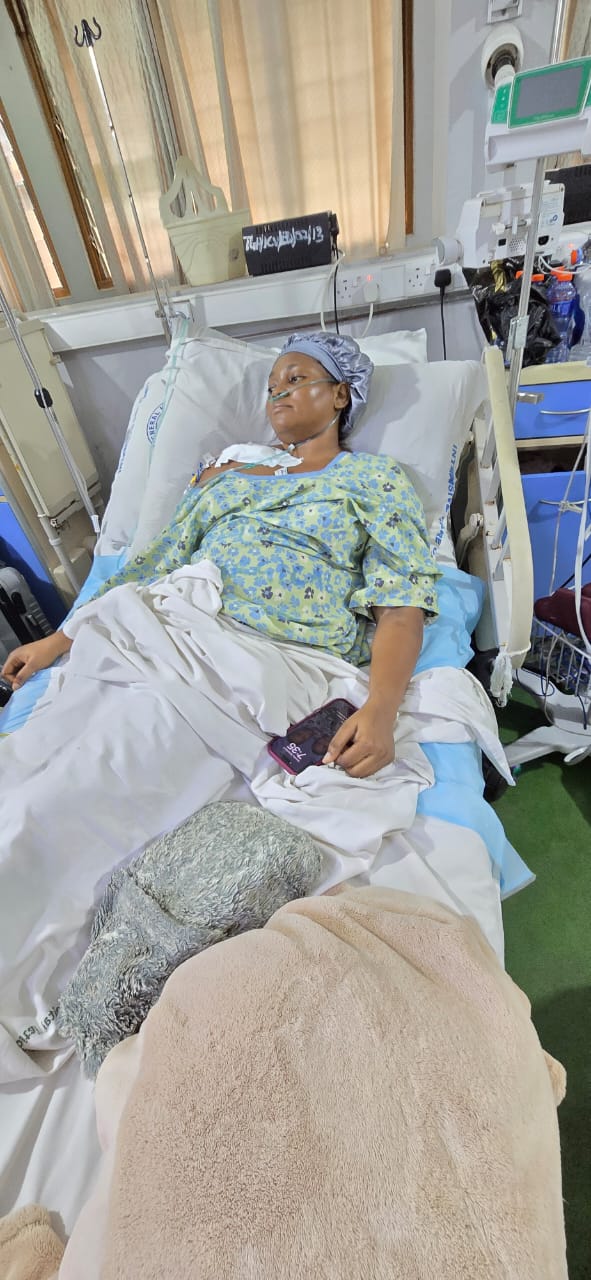
Today marks my 17th day in ICU, battling one of the worst sickle-cell crises I have ever faced.
There is an irony I cannot ignore.
I have spent years speaking about sickle cell, encouraging warriors, challenging stigma and reminding people that we can still dream, work, love, lead and thrive. Yet today, the advocate is the patient. The voice that speaks for others is fighting to stay alive.
This experience is reminding me that living boldly with sickle cell does not mean the disease has disappeared. Strength does not mean we do not suffer. Smiling does not mean we are not in pain. And advocacy does not make us immune.
I have often said we can Thrive Beyond Sickle Cell. Day 17 is teaching me that thriving does not always look like standing strong. Sometimes it is simply making it through another day. Sometimes it is allowing others to carry you when your own body cannot.
Being in ICU has not silenced the message. If anything, it has made it more urgent. Behind every statistic is a human being. Behind every crisis is a family waiting, hoping and praying. And behind many smiles are battles the world may never see.
And the irony is not lost on me that this is happening in September — Sickle Cell Awareness Month.
I have spent years speaking about sickle cell disease.
I have told people about the pain.
I have encouraged people to know their genotype.
I have spoken about prevention, treatment, stigma, blood donation and the importance of supporting people living with sickle cell disease.
I have called myself — with purpose and responsibility — The Global Voice for Sickle Cell.
But today, I am not writing merely as an advocate.
I am writing as a patient.
I am writing as a woman living with sickle cell disease.
I am writing as someone who has now spent fourteen days in ICU because of a sickle cell crisis.
And perhaps there is no more powerful awareness message I can offer this September than this:
Sickle cell is real.
Behind every statistic is a human being.
Behind every hospital admission is a family waiting for good news.
Behind every crisis is pain that many people will never fully understand.
And behind many of the people you see smiling, working, raising children, studying, building careers and pursuing dreams while living with sickle cell disease is a battle they may never show you.
A Crisis Is Not “Just Pain”
One of the greatest misunderstandings about sickle cell disease is the tendency to reduce a crisis to pain.
Yes, the pain can be terrible.
But a sickle cell crisis can become much more than pain.
Sickle cell disease affects haemoglobin, the part of our red blood cells responsible for carrying oxygen around the body. Under certain conditions, the normally flexible red blood cells can become rigid and take on the characteristic “sickle” shape.
These cells can obstruct blood flow.
And when blood and oxygen cannot move freely to tissues and organs, serious complications can follow.
That is why a person who appeared relatively well yesterday can suddenly require urgent medical attention.
That is why we must never tell someone experiencing a crisis to simply “endure it.”
That is why families, employers, teachers, colleagues and communities must understand that sickle cell disease is not an excuse people manufacture when they need time away from work, school or responsibilities.
Sometimes, the body is genuinely fighting a battle.
I know this because mine is fighting one now.
People With Sickle Cell Are Not Weak
There is another misconception I desperately want us to confront.
People living with sickle cell disease are sometimes treated as fragile, incapable or destined for failure.
We are not.
We are teachers.
Doctors.
Nurses.
Midwives.
Entrepreneurs.
Students.
Parents.
Artists.
Engineers.
Public servants.
Professionals.
Community leaders.
And advocates.
We build careers.
We fall in love.
We marry.
We raise children.
We serve our countries.
We dream.
Sickle cell disease may be part of our lives, but it must never be allowed to become the definition of our lives.
I have always believed in thriving beyond sickle cell.
But thriving does not mean pretending the disease does not exist.
It means receiving the right medical care, understanding our bodies, reducing avoidable risks, building supportive environments and refusing to allow stigma to determine how society values us.
Sometimes thriving means standing on a stage and inspiring people.
Sometimes thriving means getting out of bed and going to work.
And sometimes thriving means lying in ICU and finding enough strength to fight for another day.
All of these are victories.
Know Your Genotype Before Love Becomes a Crisis
There is one conversation Ghana cannot afford to postpone.
Genotype testing.
Many people know their blood group.
Far fewer understand their genotype.
They are not the same thing.
Knowing whether you are AA, AS, SS or another genotype variant can have enormous implications when two people are considering having biological children together.
This conversation should not begin after marriage.
It should not begin after pregnancy.
It should not begin after a child is diagnosed.
It should begin early.
And it must be handled with knowledge rather than fear or condemnation.
I am not asking young people to stop loving.
I am asking them to make informed decisions.
Love deserves truth.
Marriage deserves preparation.
And children deserve parents who understood the genetic possibilities before conception.
Genotype education should therefore not remain something discussed only in hospitals.
We need these conversations in our homes.
Schools.
Universities.
Churches.
Mosques.
Workplaces.
Youth groups.
Media houses.
And communities.
Imagine if every young Ghanaian finished secondary school understanding the difference between blood group and genotype.
Imagine if premarital counselling routinely included proper genotype education.
Imagine if accessible testing became normal rather than something people considered only after sickness entered the family.
Awareness can prevent generations of avoidable suffering.
Please, Give Blood
There is another person whose contribution to my journey I may never know by name:
the blood donor.
Across hospitals in Ghana, people living with sickle cell disease and many other conditions may require blood transfusions during serious medical complications.
The blood available in a hospital does not appear by magic.
Someone donated it.
Someone woke up one morning, went to a blood donation centre and gave part of themselves to save a stranger.
A mother they may never meet.
A child whose name they may never know.
A sickle cell patient fighting for life.
A road accident victim.
A surgical patient.
When you donate blood, you may never receive applause.
You may never know who received it.
But somewhere, a family may have been given more time with someone they love because you decided to donate.
This September, please do not only post a sickle cell awareness graphic.
Consider donating blood.
Awareness must eventually become action.
The Pain You Cannot See
One of the hardest things about living with sickle cell disease is that much of the struggle can be invisible.
You may see someone smiling in a photograph without seeing what happened the night before.
You may meet someone at work without knowing that they were in pain that morning.
You may see someone looking healthy and assume they are exaggerating when they say they are unwell.
Please resist that temptation.
Chronic illness does not always announce itself visually.
Sometimes the strongest-looking person in the room is carrying the greatest physical battle.
This is why compassion matters.
An employer who understands.
A lecturer who listens.
A teacher who notices.
A colleague who does not ridicule.
A spouse who learns.
A friend who stays.
A health professional who treats the patient with dignity.
These things matter more than we sometimes realise.
To Parents: Do Not Raise a Child to Believe Their Life Is Over
To every parent who has just been told that their child has sickle cell disease, I want to say something important.
Please do not allow fear to become your child’s first identity.
Learn.
Ask questions.
Follow medical advice.
Understand your child’s triggers and health needs.
Seek proper care when necessary.
But also allow that child to dream.
Do not raise them believing they are incapable simply because they have sickle cell disease.
Teach responsibility, not fear.
Teach awareness, not hopelessness.
Teach them how to protect their health while still believing that their future is worth pursuing.
A diagnosis changes certain realities.
It should not cancel destiny.
And To My Fellow Warriors
To every person living with sickle cell disease reading this:
I see you.
The hospital visits nobody posts.
The medications.
The exhaustion.
The cancelled plans.
The pain.
The nights you wondered how much more your body could take.
The moments you wanted people to understand without having to explain everything again.
The fear that sometimes accompanies a new pain.
The strength required simply to keep going.
I understand.
At this very moment, I am walking through my own battle.
Fourteen days in ICU is not the September awareness campaign I imagined.
But perhaps this hospital bed has given me an even stronger microphone.
Because awareness is different when the person asking society to listen is also fighting the disease she is talking about.
Ghana, We Must Do Better
Sickle Cell Awareness Month should not become thirty days of posters followed by eleven months of silence.
We need sustained public education.
We need accessible genotype testing and genetic counselling.
We need stronger support systems for families.
We need adequate blood stocks.
We need workplaces and schools that understand the realities of the disease.
We need continued investment in quality sickle cell care, research and treatment.
We need health professionals equipped with the resources necessary to manage patients effectively.
We need to fight stigma.
And, critically, we need to include the voices of people actually living with sickle cell disease whenever policies, programmes and interventions concerning us are being designed.
There is a principle that should guide every conversation about sickle cell:
Nothing about us without us.
Patients are not merely beneficiaries of healthcare policy.
We are experts in the lived experience of the disease.
Our experiences belong at the table.
If My ICU Bed Could Speak
If my ICU bed could speak this September, I think it would say:
Know your genotype.
It would say:
Donate blood.
It would say:
Stop stigmatising people living with sickle cell disease.
It would say:
Never underestimate a sickle cell crisis.
It would remind employers that compassion can save careers.
It would remind schools that understanding can protect a child’s future.
It would remind policymakers that behind every policy document are real human beings.
It would remind couples that informed reproductive decisions matter.
It would remind families that patients need support, not pity.
And it would remind every person living with sickle cell disease:
Your diagnosis is part of your story. It does not have to become the end of your story.
This September, Let Awareness Mean Something
When September ends, people will change their profile pictures.
Campaign banners will come down.
The hashtags will become quieter.
But sickle cell disease will not disappear on October 1.
Patients will still wake up with it.
Families will still manage it.
Hospitals will still treat crises.
Blood will still be needed.
Research will still matter.
Prevention will still matter.
And advocacy must continue.
So this September, I am asking Ghana for something more than sympathy for me.
Do not simply say, “Get well soon, Bethlyn.”
Let my experience make you do something.
Learn about sickle cell disease.
Know your genotype.
Encourage someone else to know theirs.
Donate blood if you are eligible.
Support a family living with sickle cell disease.
Treat patients with dignity.
Speak against stigma.
Demand stronger systems of care.
Because somewhere tonight, another sickle cell patient may be entering a hospital.
Somewhere, another mother may be sitting beside a hospital bed.
Somewhere, another family may be praying.
Today, that family is mine.
Today, that patient is me.
I have spent fourteen days in ICU.
I am still here.
I am still fighting.
And as long as I have a voice, I will continue using it — not only for myself, but for every person living this journey who deserves to be seen, understood, supported and given the opportunity to thrive.
Sickle cell is real.
The pain is real.
The risks are real.
But so too are our courage, our dreams, our contributions and our determination to live.
This September — and every month after it — may Ghana choose knowledge over ignorance, compassion over stigma, prevention over regret and action over awareness alone.
Today, I am still in ICU. I am still fighting. I am still believing.
Please keep me – and every sickle-cell warrior fighting a difficult crisis today – in your thoughts and prayers.
I am Bethlyn Arthur. The Global Voice for Sickle Cell. Even from this ICU bed, the message remains: Thrive Beyond Sickle Cell.