Ghana’s year-on-year inflation rate rose to 5.2% in September 2026, up from 5.0% in August, driven mainly by higher prices of locally produced goods, fresh food items and services.
The figures were presented by the Government Statistician, Dr Alhassan Iddrisu, during the release of the September 2026 Consumer Price Index (CPI) by the Ghana Statistical Service (GSS) on Wednesday.
Although inflation increased for the second consecutive month, the September rate remained 4.2 percentage points lower than the 9.4% recorded in September 2025.
Dr Iddrisu explained that the latest increase was largely driven by domestic factors, with locally produced items accounting for about 86% of overall inflation, while services inflation remained significantly higher than goods inflation.
“Today, inflation is driven mainly by services and by homegrown items,” he said.
Month-on-month inflation also increased by 1.1% in September, reversing the 1% decline recorded in August.
This means that the average cost of the consumer basket increased by 1.1% between August and September 2026.
The Consumer Price Index stood at 271.5 points, representing a 13.5% increase over its September 2025 level.
Food inflation rises, non-food eases
Food inflation increased to 4.0% in September, from 3.0% in August, although it remained significantly below the 11% recorded a year earlier.
Food prices increased by 1.5% month-on-month in September, following a 2.6% decline in August.
Non-food inflation, meanwhile, eased to 6.2% from 6.8% in August and 8.2% a year earlier.
Despite the moderation, non-food items accounted for about 63% of overall inflation, compared with 37% for food.
Dr Iddrisu said the figures showed that food prices were increasing much more slowly than a year earlier, while non-food items continued to make the larger contribution to the national inflation rate.
Services remain major source of price pressure
Services inflation eased marginally to 8.3% in September, from 8.6% in August, but remained significantly higher than goods inflation of 4.2%.
According to the Government Statistician, services inflation stood at only 4.8% a year ago, making services the major category where inflation is currently higher than it was a year earlier.
“Services are rising about twice as fast as goods,” Dr Iddrisu said.
Housing, water, electricity, gas and other fuels recorded the highest inflation rate among the 13 spending divisions at 10.3%, although this was down from 11.6% in August.
Restaurants and hotels recorded inflation of 9.2%, while transport inflation eased from 7.6% to 5.7%.
Education recorded a sharp decline from 9.3% to 5.7%, while information and communication recorded the lowest inflation rate at 0.3%.
Tomatoes and ginger drive inflation
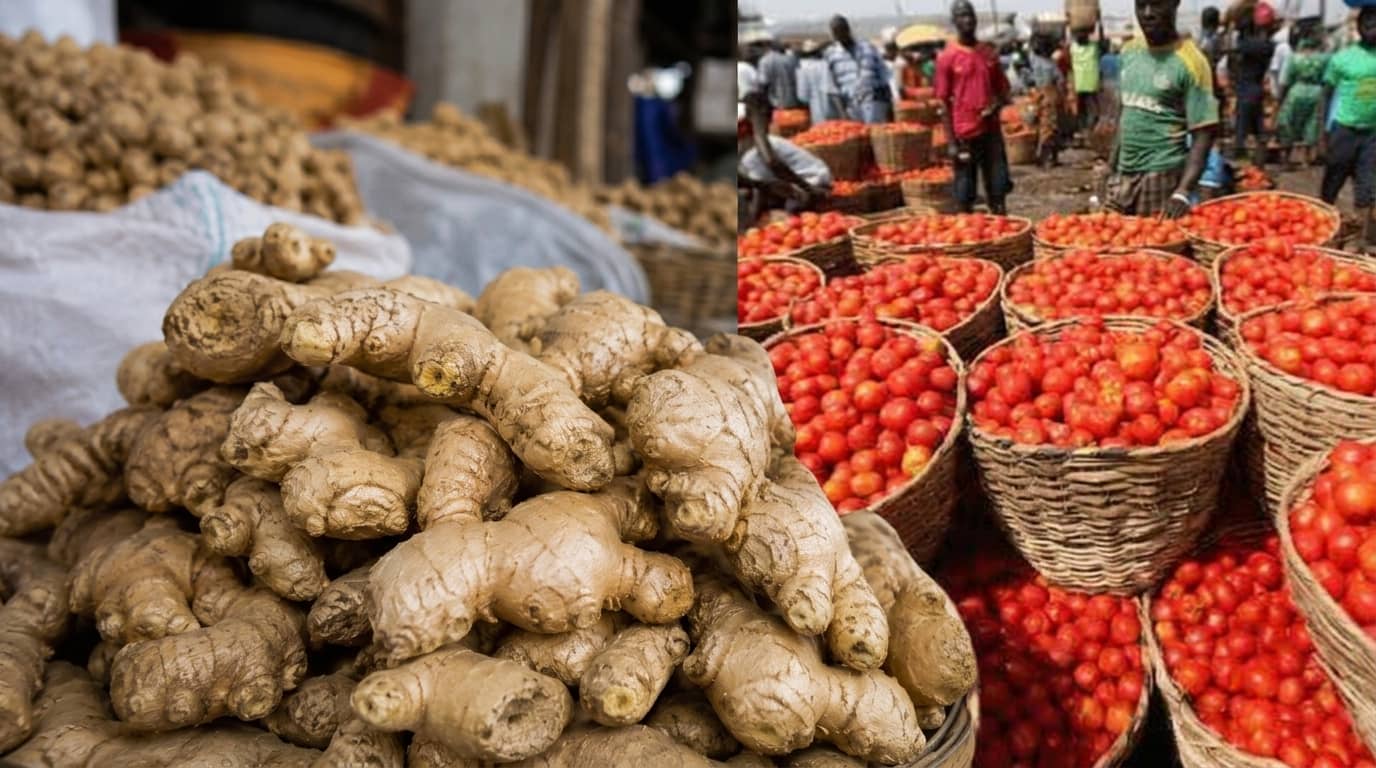
Fresh tomatoes were the largest individual contributor to September inflation, accounting for 20.3% of the overall rate.
They were followed by rent payments at 13.9%, ginger at 9.9%, cooked rice at 7%, and bus and trotro fares and yam, which each contributed 5.4%.
Fresh tomatoes also recorded the highest year-on-year price increase, rising by 153.4%, while ginger increased by 100.4%.
Other items recording significant increases included shrimps at 62.8%, mangoes at 46.6%, and parking space and related services at 40%.
In contrast, lime prices fell by 29.9%, maize by 26.4%, foreign apples by 24.1%, Bambara beans by 21.7% and carrots by 21.5%.
Dr Iddrisu said tomatoes and ginger alone accounted for about 30% of inflation, highlighting the influence of a relatively small number of fresh food items on the overall rate.
Domestic prices continue to outpace imported inflation
Inflation for locally produced items increased to 6.4% from 6.1% in August, while inflation for imported items rose marginally to 2.4% from 2.2%.
Locally produced items therefore recorded price increases at more than twice the rate of imported goods.
The GSS said the figures indicated that inflation was currently “largely homegrown”, with local items accounting for about 86% of inflation in September.
Wide regional differences
The national inflation figure continued to mask significant differences across the regions.
The Ashanti Region recorded the highest inflation at 9.8%, up from 8.7% in August, followed by the Eastern Region at 7.8% and the Central Region at 7.2%.
The Western Region recorded the lowest inflation at -0.5%, indicating that average prices were marginally lower than a year earlier.
Bono East recorded -0.1%, while Northern Region recorded 0.02%.
Greater Accra’s inflation rate fell to 3.4% from 5.0% in August and 7.7% a year earlier.
Inflation increased in nine regions, declined in five and remained broadly unchanged in two.
On a month-on-month basis, prices increased in 13 regions in September, compared with declines in 14 regions in August.
The largest monthly increases were recorded in the North East Region at 4.2%, Eastern at 3.5% and Western at 3.2%.
Ashanti and Greater Accra together accounted for 57% of national inflation in September because of their size and the inflation rates recorded in the two regions.
Despite the regional differences, Dr Iddrisu noted that inflation in all 16 regions was lower in September 2026 than it was a year earlier.
Inflation nearly halves over the year
Inflation has fallen significantly over the past year, from 9.4% in September 2025 to a low of 3.2% in March 2026.
It subsequently increased to 5.3% in June, moderated to 4.6% in July, and then rose to 5.0% in August before reaching 5.2% in September.
Dr Iddrisu said the figures showed that inflation had nearly halved over the past year, although its direction over the past two months had been upward.
“Both are facts, and both matter,” he said.
For households, the GSS advised consumers to monitor services costs, including rent, transport and school fees, while taking advantage of lower prices for some staples.
Businesses were encouraged to use official inflation data when setting prices and negotiating contracts, while paying particular attention to services costs.
The GSS also said the September inflation rate of 5.2% remained below the lower band of the Bank of Ghana’s medium-term inflation target of 8% ±2 percentage points.