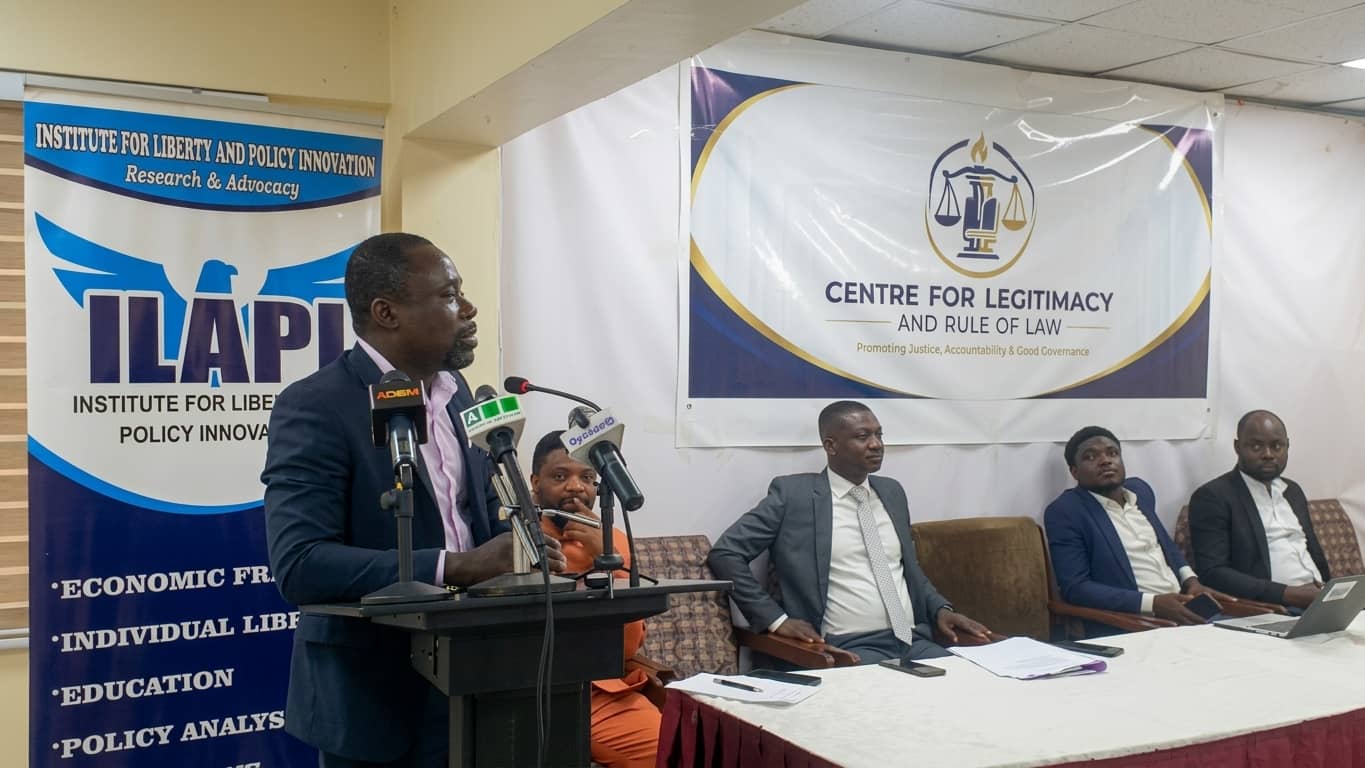
The Executive Director of the Institute for Liberty and Policy Innovation, Mr. Peter Bismark Kwofie, has raised concerns over what he describes as a growing pool of unclaimed funds held by banks across Ghana, revealing that more than GH¢400 million belonging to deceased persons remains inaccessible to their families.
According to Mr. Kwofie, many relatives of deceased account holders are unable to retrieve funds left behind due to complicated administrative procedures, high processing costs, and limited public awareness about the processes involved.
Speaking during a media engagement at the International Press Centre on May 6, 2026, he said the situation has become a hidden contributor to poverty among many Ghanaian families.
He explained that investigations conducted by the institute into the causes of persistent poverty in Ghana revealed that inaccessible inherited funds were a major but often overlooked factor.
According to him, several families continue to struggle financially while substantial savings and investments belonging to deceased relatives remain locked up in dormant bank accounts.
“Many people save and invest with banks throughout their lifetime, but when they pass away, their families often struggle to access those funds because of the cumbersome processes involved,” he stated.
Mr. Kwofie argued that there is currently inadequate enforcement mechanisms compelling financial institutions and regulators to actively trace beneficiaries or next of kin of deceased account holders. He noted that the absence of proactive systems has resulted in huge sums remaining idle in the banking sector while affected families endure economic hardship.
He further indicated that the institute has begun an advocacy and support initiative aimed at helping families understand the recovery process and access funds rightfully belonging to them.
“We believe addressing the issue of unclaimed funds can significantly ease the financial burden on many households and contribute to reducing poverty levels in the country,” he added.
Also speaking at the event was Mr. Richard Nii Armah, Esq., Executive Director of the Centre of Legitimacy and Rule of Law, the firm that spearheaded the investigation.
He explained that under existing banking regulations, accounts that remain inactive for prolonged periods are classified as dormant accounts, and after a specified period, the funds are transferred to the Bank of Ghana for safekeeping.
According to him, the problem is compounded by the fact that many account holders fail to disclose full financial details to their spouses or relatives before death, making it difficult for families to identify and claim such assets during estate administration.
Mr. Armah also alleged that some banks fail to adequately comply with legal requirements mandating the publication of dormant accounts and efforts to contact next of kin before accounts are classified as dormant.
He therefore called on the Bank of Ghana to strengthen regulatory oversight and ensure financial institutions comply fully with existing rules governing dormant and unclaimed accounts.
The policy advocates believe that improving transparency, simplifying claim procedures, and enhancing public awareness could help thousands of families recover dormant assets and improve their economic conditions.