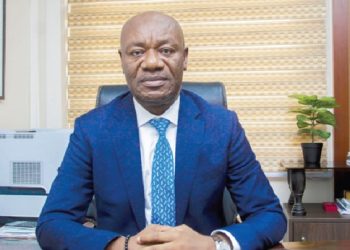
Young people across Ghana are increasingly embracing savings, investments, and insurance as financial literacy education deepens, Executive Director of the Centre for Financial Literacy Education (CFLE) Africa, Peter Asare Nyarko, has revealed.
Speaking at the 2026 National Financial Awareness and Literacy Conference held on April 21 at the ISSER Conference Centre, University of Ghana, Legon, Mr. Nyarko said the growing financial awareness among the youth is a direct result of sustained education efforts by his organisation.
“Many young people in Ghana today have learnt how to save, invest, and engage in various forms of insurance,” he noted, adding that CFLE Africa’s interventions are equipping the younger generation with practical financial skills to secure their futures.
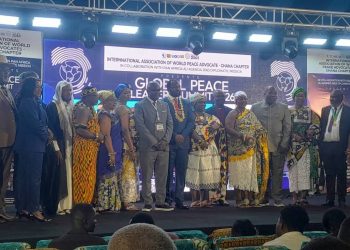
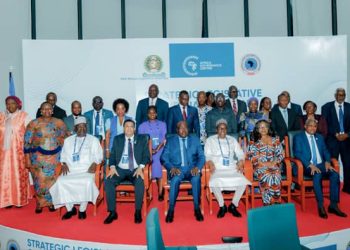
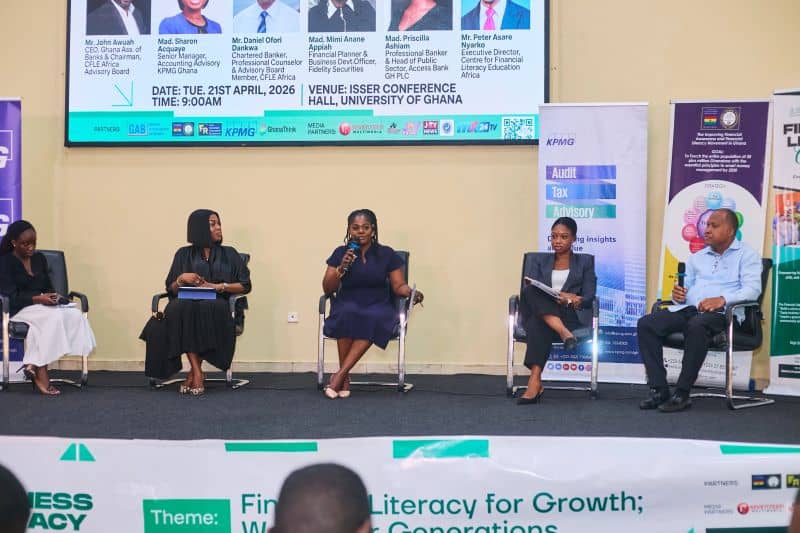
The conference, held under the theme “Financial Literacy for Growth, Wealth for Generations,” brought together policymakers, financial experts, educators, and students to deliberate on the role of financial knowledge in national development.
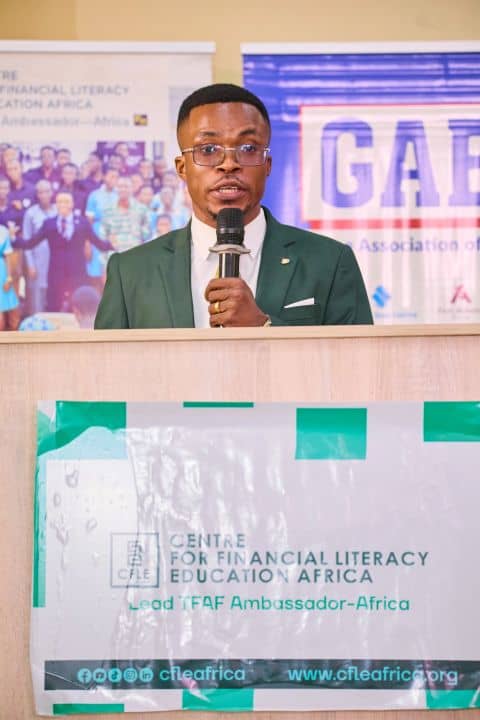
Mr. Nyarko explained that CFLE Africa was established to inculcate financial literacy in Ghanaians, with a long-term vision of fostering financial independence, particularly in old age. He stressed that the organisation’s mission goes beyond teaching people how to earn money to helping them understand how to grow and sustain it.
“Today is not just about speeches and presentations it is about your future. Imagine a world where every young person understands money not just how to earn it, but how to manage it, grow it, and use it to create opportunities for themselves, their families, and future generations,” he said
He described this year’s theme as a call to action for young people to take their financial lives seriously, emphasizing that decisions taken early in life have lasting consequences.
Mr. Nyarko highlighted CFLE Africa’s flagship initiative, the Financial Awareness and Literacy Movement, describing it as a comprehensive educational and communication platform designed to empower individuals, businesses, and even nations to take control of their financial futures.
According to him, the initiative goes beyond awareness creation to building confidence, sharpening financial thinking, and equipping participants to make informed decisions.
He added that within just five years, the programme has made significant inroads in second-cycle institutions, with many students now running small businesses, saving regularly, and investing.
While commending progress made, Mr. Nyarko renewed his call for stronger institutional support, urging government and policymakers to elevate financial literacy into a standalone subject in schools.
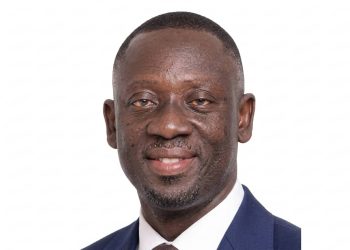
Chairman of the CFLE Africa Advisory Board, John Awuah underscored the transformative power of financial literacy, describing it as “the fundamental grammar of freedom.”
“We are here to move people from survival to stability, from stability to success, and from success to legacy. Financial literacy is not just a skill—it is the bridge between being educated and being economically empowered,” he stated.
Mr. Awuah challenged conventional notions that academic excellence automatically translates into financial intelligence, warning that many highly educated individuals remain financially vulnerable due to a lack of practical money management skills.
“Academic literacy teaches you how to work; financial literacy teaches you how to make your money work for you,” he said.
Mr. Awuah, who is also the Chief Executive Officer of the Ghana Association of Banks, further stressed the importance of cultivating a “wealth mindset,” noting that true wealth is not merely about income but about disciplined thinking, delayed gratification, and an understanding of compounding.
He also urged stakeholders to integrate digital literacy into financial education, warning that technological advancement without financial knowledge could worsen inequalities.
“If you have a solid financial foundation, technology can make you wealthy faster. Without it, it can make you go broke at the speed of light,” he cautioned.
Delivering a solidarity message from the United States, Founder of The Financial Awareness Foundation, Valentino Sabuco, described financial illiteracy as a global social challenge and commended Ghana’s leadership in advancing financial education.

“Financial awareness and money management are not luxuries—they are basic human rights. By improving these skills, we uplift individuals, families, communities, and entire economies,” he said.
He praised Mr. Nyarko and CFLE Africa for extending the global Financial Awareness and Literacy Movement to Ghana and across the African continent, noting that the initiative is now active in multiple countries and institutions worldwide.
Also speaking at the event, CFLE Africa Advisory Board Member, Mr. Daniel Ofori Dankwa, emphasized the importance of targeting young people.
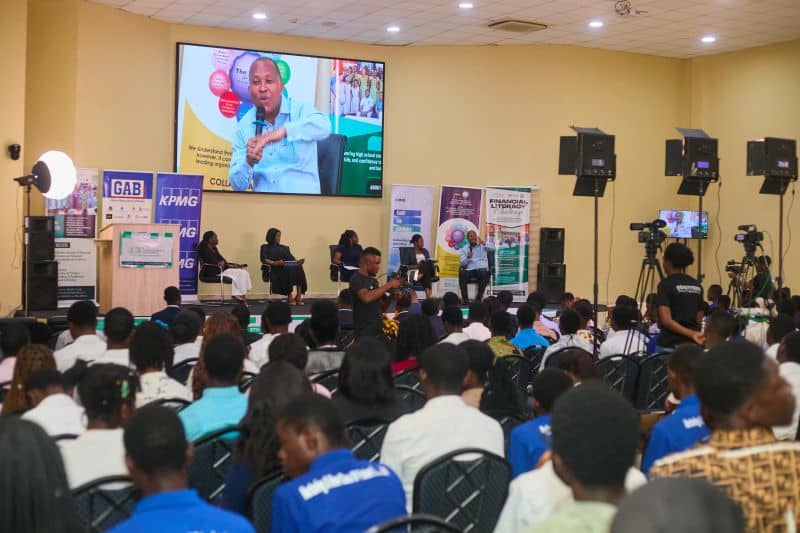
We want to catch them young because they are the next generation. If they understand how to manage, make, and multiply money early, it will benefit the entire country,” Mr. Dankwa observed.
The conference also featured a Financial Literacy Challenge, designed to test the depth of understanding and application of financial knowledge among students from second-cycle institutions.
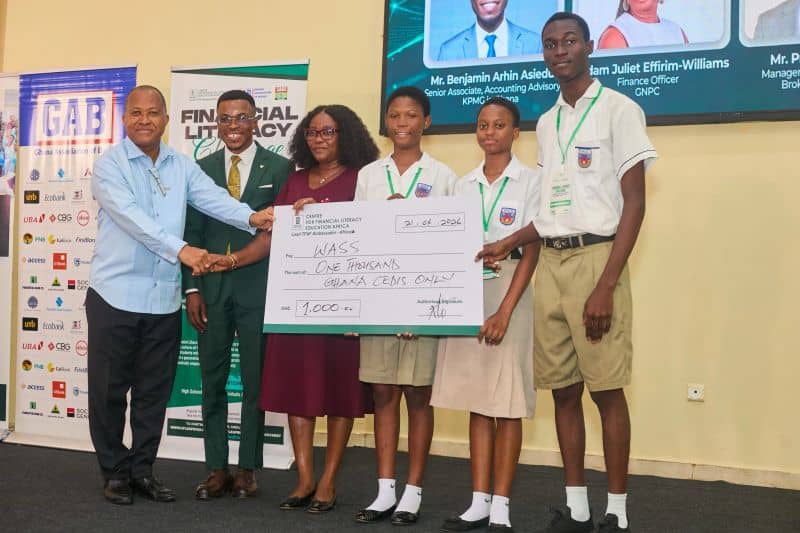
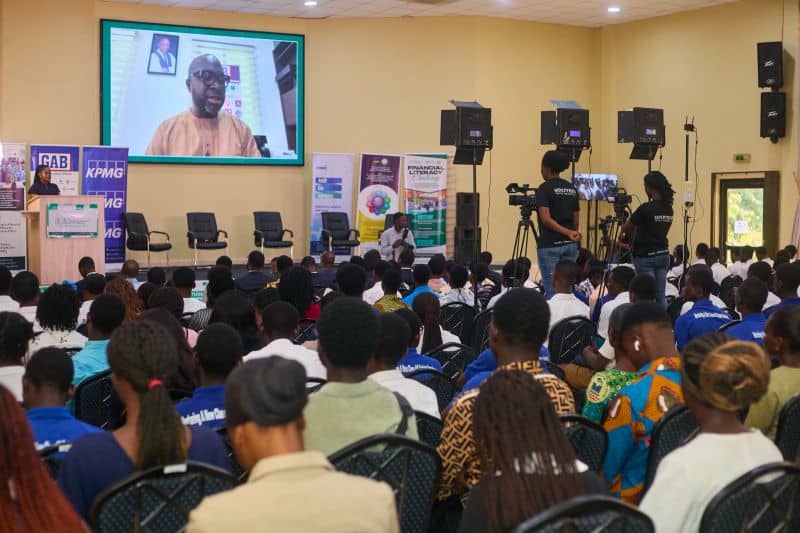
The contest featured three schools: Presbyterian Boys’ Secondary School (PRESEC), Legon; West Africa Senior High School (WASS); and Apam Senior High School in the Central Region. While PRESEC and WASS participated in person at the conference venue, Apam Senior High School joined virtually via Zoom.
The panel of judges assessed participants on their grasp of financial concepts, analytical ability, and practical application of knowledge.
After a competitive session, West Africa Senior High School emerged as winners, earning top honours for their outstanding performance.