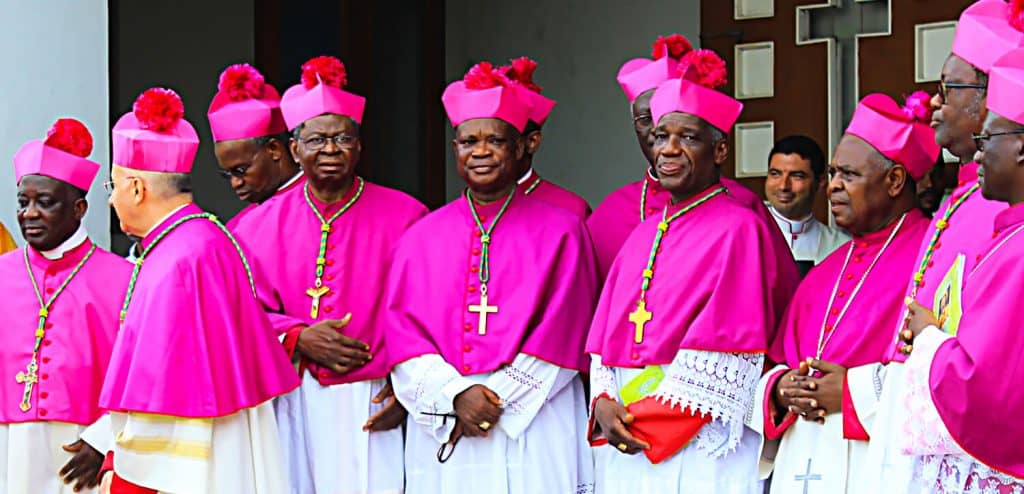
The Ghana Catholic Bishops’ Conference has issued a strongly worded pastoral statement urging national leaders to treat Ghana’s ongoing family values debate with “seriousness and respect,” warning that dismissing it as unimportant risks undermining the country’s moral foundation.
The statement follows recent comments by President John Dramani Mahama and Government Communications Minister Felix Kwakye Ofosu, who reportedly downplayed LGBTQ+ discussions as not a major national priority, with the latter describing the issue as a “waste of time.”
Responding directly, the bishops cautioned that such characterisations could send the wrong signal.
“Even if intended to prioritise urgent socio-economic concerns, such descriptions risk conveying that certain moral questions may be set aside as inconsequential,” the statement noted. “Yet no question that touches the structure of human identity, family life, and social continuity can be trivial.”
The bishops acknowledged Ghana’s pressing economic challenges—rising inflation, youth unemployment, and gaps in healthcare and education—but rejected what they described as a “false dichotomy” between economic progress and moral values.
“The two are not rivals but companions,” they stressed, arguing that strong family systems underpin social stability, educational outcomes, and long-term economic development. “The family, in quiet ways, is a nation’s most efficient social welfare system.”
At the heart of the statement is a reaffirmation of what the Church describes as widely held Ghanaian values—marriage as a union between a man and a woman, and the family as the “first school of virtue.”
Still, the bishops were careful to strike a balancing tone, underscoring the need to uphold human dignity for all.
“No individual, regardless of sexual orientation or identity, may be subjected to violence, hatred, or unjust discrimination,” they said. “Such acts are moral failures and social wounds.”
They argued that protecting human dignity and defending traditional family structures are not mutually exclusive, warning that isolating one principle from the other could lead to “distortion.”
On the controversial Human Sexual Rights and Family Values Bill currently before Parliament, the bishops urged President Mahama to honour his earlier pledge to assent to the bill if it is duly passed through constitutional processes.
“Democratic integrity rests, in part, on the fidelity of leaders to their publicly stated commitments,” the statement said.
However, they also acknowledged that aspects of the bill have raised legitimate concerns, calling for careful legislative scrutiny to ensure that any final law reflects both the moral convictions of Ghanaians and constitutional protections of fundamental rights.
In a broader appeal, the bishops called for a more measured and inclusive national conversation involving government, religious leaders, traditional authorities, and civil society.
“To describe such a debate as a ‘waste of time’ risks alienating citizens for whom these issues are existentially meaningful,” they warned.
The statement concluded with a reflection on Ghana’s current crossroads, describing it as a moment where “economic aspiration meets moral self-definition,” with decisions made today likely to shape the nation’s future for generations.
“We pray that our nation may be guided by wisdom, anchored in justice, and animated by charity,” the bishops added, calling for unity, respect, and moral clarity in public discourse.