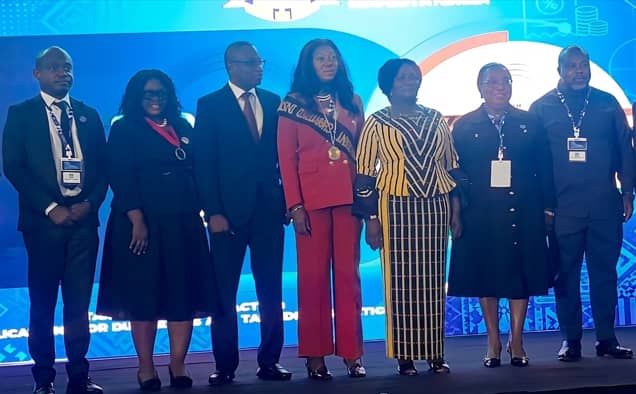
Vice President Prof. Naana Jane Opoku-Agyemang has called for continued reforms to Ghana’s tax system to make it simpler, fairer and more responsive to the needs of taxpayers and businesses.
She said a tax system that taxpayers can easily understand and navigate was more likely to encourage voluntary compliance, strengthen the revenue base and sustain confidence in public institutions.
The Vice President made the call on Wednesday, August 19, 2026, at the opening ceremony of the Chartered Institute of Taxation Ghana’s (CITG) annual conference in Accra, held on the theme “Tax Reforms in Practice: Implications for Businesses and Tax Administration.”
Prof. Opoku-Agyemang said governments globally were redesigning their tax systems in response to rapid economic, technological and geopolitical changes, while seeking to mobilise resources to finance infrastructure, education, healthcare, climate adaptation, social protection and national security.
“We need a tax system that raises sufficient revenue, encourages investment, promotes voluntary compliance, supports businesses, and sustains the confidence of the Ghanaian people,” she said.
VAT reforms and digitalisation
The Vice President said Ghana’s recent tax reforms were intended to ease pressure on households and businesses while creating a simpler and more balanced tax environment.
She highlighted reforms to the Value Added Tax (VAT) system, alongside measures to improve the taxation of cross-border transactions conducted through digital platforms.
She also pointed to the introduction of digital electronic devices to strengthen tax compliance and monitoring.
According to her, tax reforms must be accompanied by effective administration, greater use of technology and data, and a taxpayer relationship founded on enforcement, service and trust.
“Ghana is therefore continuing to digitise public administration,” she said.
Prof. Opoku-Agyemang added that government was undertaking a broader review of Ghana’s core tax regulations to simplify compliance, improve equity and competitiveness, and ensure that tax laws remained relevant to the changing economy.
Informal sector remains key to expanding tax base
The Vice President also identified the informal economy as an important area in efforts to broaden Ghana’s tax base.
She said expanding the tax base required creating practical avenues for more individuals and businesses, particularly those operating in the informal sector, to participate in the tax system.
However, she stressed that efforts to increase tax compliance must be accompanied by greater public trust.
“People are more willing to comply when they believe that there is no compromise, when the rules are clear and consistently applied, when they can deal with the tax authorities without unnecessary difficulties, and when public resources are managed responsibly,” she said.
She therefore urged the Ghana Revenue Authority (GRA) to continue improving taxpayer education, consultation and service delivery.
She also called on tax professionals to help individuals and businesses understand and meet their legitimate tax obligations.
GRA adopts human-centred approach
The Commissioner-General of the GRA, Anthony Kwasi Sarpong, said the Authority was changing its approach to tax administration by placing greater emphasis on service, fairness and voluntary compliance.
He said the GRA wanted to be viewed as a stakeholder rather than an institution whose primary role was to compel taxpayers to comply.
“We are looking forward to changing our image,” Mr Sarpong said, stressing that passing tax legislation was only the first step, while effective and fair implementation was equally important.
He said the GRA was adopting a risk-based approach to identify taxpayers who were not complying with the law and focus enforcement efforts on them.
The Authority was also investing significantly in capacity building for its officers to ensure they remained current with tax laws and possessed the technical expertise required to implement them effectively.
Mr Sarpong said improving taxpayer service was another key component of the GRA’s new approach.