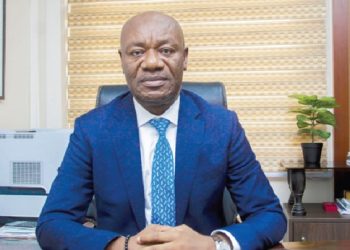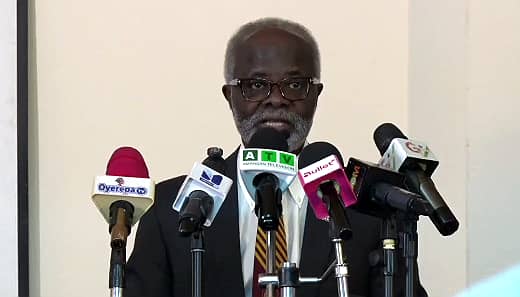
The Global Chairman of Groupe Nduom, Dr. Papa Kwesi Nduom, has announced that the company is preparing to reopen GN Savings and Loans following a Court of Appeal ruling that quashed the 2019 revocation of the institution’s licence by the Bank of Ghana.
Addressing the media for the first time since 2019 at a press briefing organised by GN Savings and Loans and Groupe Nduom, Dr. Nduom described the legal victory as a long-awaited moment of justice after what he called years of pressure and hardship.
“This is the first time I am talking to the media like this since 2019. It has been a long and tough seven years,” he said.
According to him, the Court of Appeal on May 21, 2026, set aside the entire judgment of the Human Rights Division of the High Court delivered on January 24, 2024, and ordered the immediate restoration of GN Savings’ licence.
Dr. Nduom explained that the appellate court also directed the receiver to hand over possession, management, and control of the company’s assets back to shareholders.
“The decision of the Bank of Ghana dated August 16, 2019, revoking the licence of GN Savings as insolvent has been quashed,” he stated.
He stressed that the company’s next steps would strictly follow the court’s directives.
“We are taking instructions from the order given by the Court of Appeal, particularly the word ‘immediately’. They didn’t say go for negotiation or arbitration. They said immediately restore the licence and immediately hand over the assets,” he said.
Dr. Nduom revealed that preparations were already underway to resume operations but indicated the company would proceed in compliance with the legal process.
He recounted the origins of the financial institution, stating that plans for what was then known as First National Savings and Loans began in 1997 and took nine years before operations officially commenced in May 2006.
“Nobody gifted us First National Savings and Loans. We worked for it,” he said.
He explained that the institution was built with a mission to expand banking services to underserved and unbanked communities across Ghana, including remote areas where mainstream banks had little presence.
According to him, GN Savings and its predecessor institutions introduced innovative financial inclusion initiatives, including low-entry savings accounts, mobile banking interoperability, and microfinance support for small businesses and traders.
“We wanted to do business in the major market centres and towns in every region of the country. Financial inclusion was key,” he noted.
Dr. Nduom argued that the closure of the institution created a vacuum that had not been filled, especially in rural communities where customers relied heavily on the bank’s branch network and mobile banking services.
“Nobody has gone back to places like Nantong, Gushiegu, Walewale, Tumu, and others to set up banking like we did. Those who relied on us don’t have alternatives,” he said.
He disclosed that at its peak, the institution operated nearly 300 branches nationwide and served over 1.2 million customers, while directly employing more than 2,000 workers.
“We developed a strategy to reach 300 branches with one million customers, and by 2018 we had achieved it before the programme was truncated,” he stated.
Dr. Nduom also revealed that prior to the revocation of the licence, the company had secured arrangements for a US$20 million loan facility from the former Overseas Private Investment Corporation of the United States to support traders and small businesses, but the deal collapsed following the banking sector cleanup.
Despite recounting what he termed “state-sponsored terrorism” against indigenous financial institutions, Dr. Nduom said the company was focused on rebuilding rather than dwelling on past grievances.
“This is not a time to quarrel, sow hatred, or be negative. We are moving with faith in the Lord and confidence in our abilities to change what has been negative into something positive,” he said.
He maintained that GN Savings and the eventual return of GN Bank would contribute significantly to economic activity, job creation, and financial inclusion across the country.