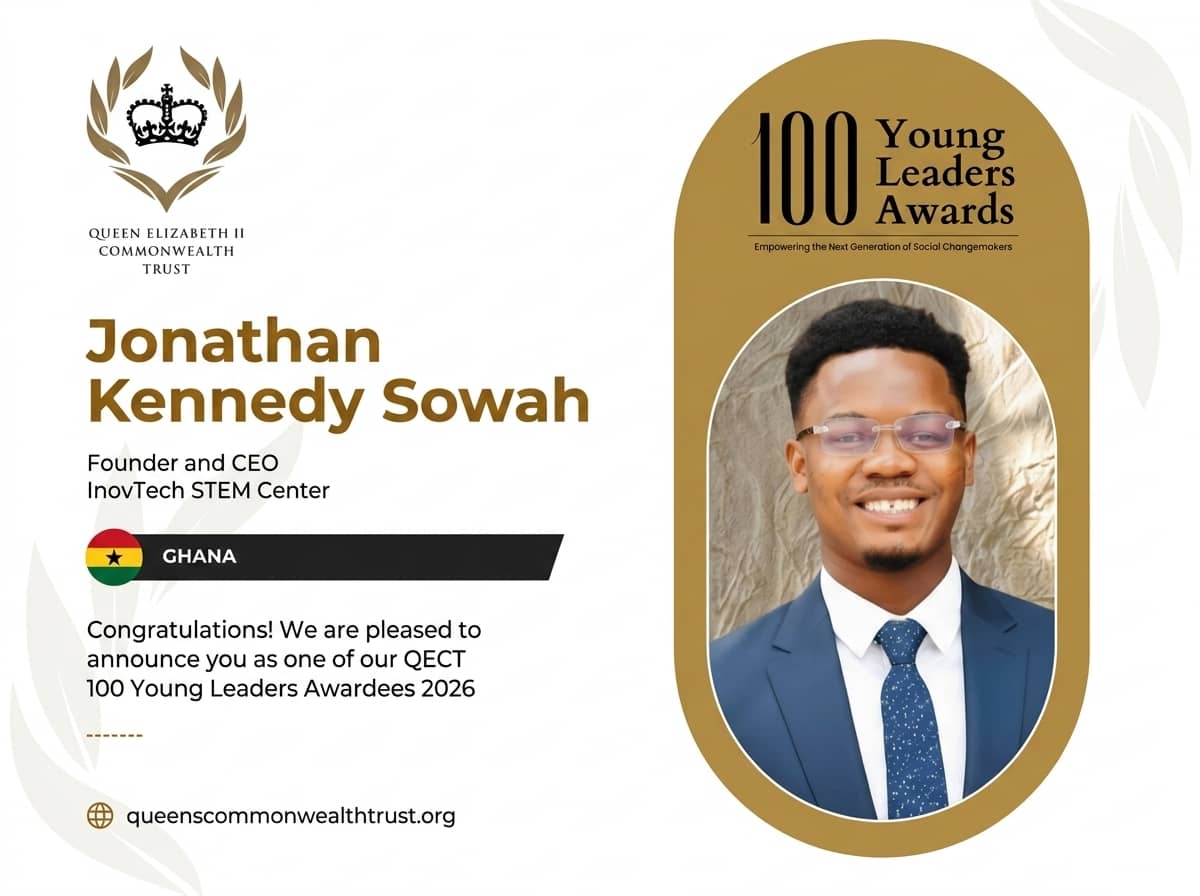
He learned to code without a computer. Now he is teaching a continent.
From a Ghanaian classroom with no computers to the Commonwealth’s global stage, Jonathan Kennedy Sowah is rewriting what African innovation looks like.
A Ghanaian innovator building the future of practical STEM and AI education in Africa has been honoured by the Queen Elizabeth II Commonwealth Trust, having been named among the QECT 100 Young Leaders Awardees 2026—a global recognition marking what would have been the 100th birthday of Her Late Majesty Queen Elizabeth II.
There are founders who wait for the tools to arrive. Then there are people like Jonathan Kennedy Sowah, who build the tools themselves.
Born and raised in Ghana, Jonathan grew up among the silent majority of African children whose curiosity outpaced their access. Computers were things he read about long before he ever touched one. Circuits, coding software, and virtual laboratories—the tools powering industries elsewhere—were absent from the classrooms around him.
He left school earlier than most of his peers, not out of resignation, but with a determination to pursue education on his own terms. What followed were years of self-teaching, borrowed machines, free online tutorials, and the steady discipline of a young man building himself from the ground up.

This month, Jonathan reached another milestone. He was named a QECT 100 Young Leaders Awardee 2026, a recognition that reflects the very spirit his work embodies: service, innovation, and the belief that one person can create meaningful change.
“I never saw my background as a limitation. I saw it as a reason.”
That reason led him to found InovTech STEM Center in 2018, an EdTech and AI company that has grown into one of West Africa’s most impactful builders of practical STEM education infrastructure.
At the heart of this work is KodeVR, his flagship innovation—a lightweight, AI-powered coding and robotics simulation platform designed for underserved communities. It enables students to practise robotics, coding, electronic circuits, 3D modelling, and artificial intelligence without the need for expensive physical equipment.
Alongside KodeVR is STEMSET, a line of robotics and STEM learning kits engineered from recycled plastic waste. In a country where many schools still teach science without laboratories and computing without computers, these innovations are not luxuries—they are bridges across a longstanding gap.
To date, InovTech STEM Center has impacted over 25,000 students—45 percent of them girls—trained more than 2,500 teachers, and reached over 100 schools across both public and private education systems in West Africa. The organisation has also supported innovation-driven projects, including the World Bank’s MS4SSA initiative.
Behind each statistic is a transformed classroom: a student building their first circuit and a teacher confidently introducing AI concepts.
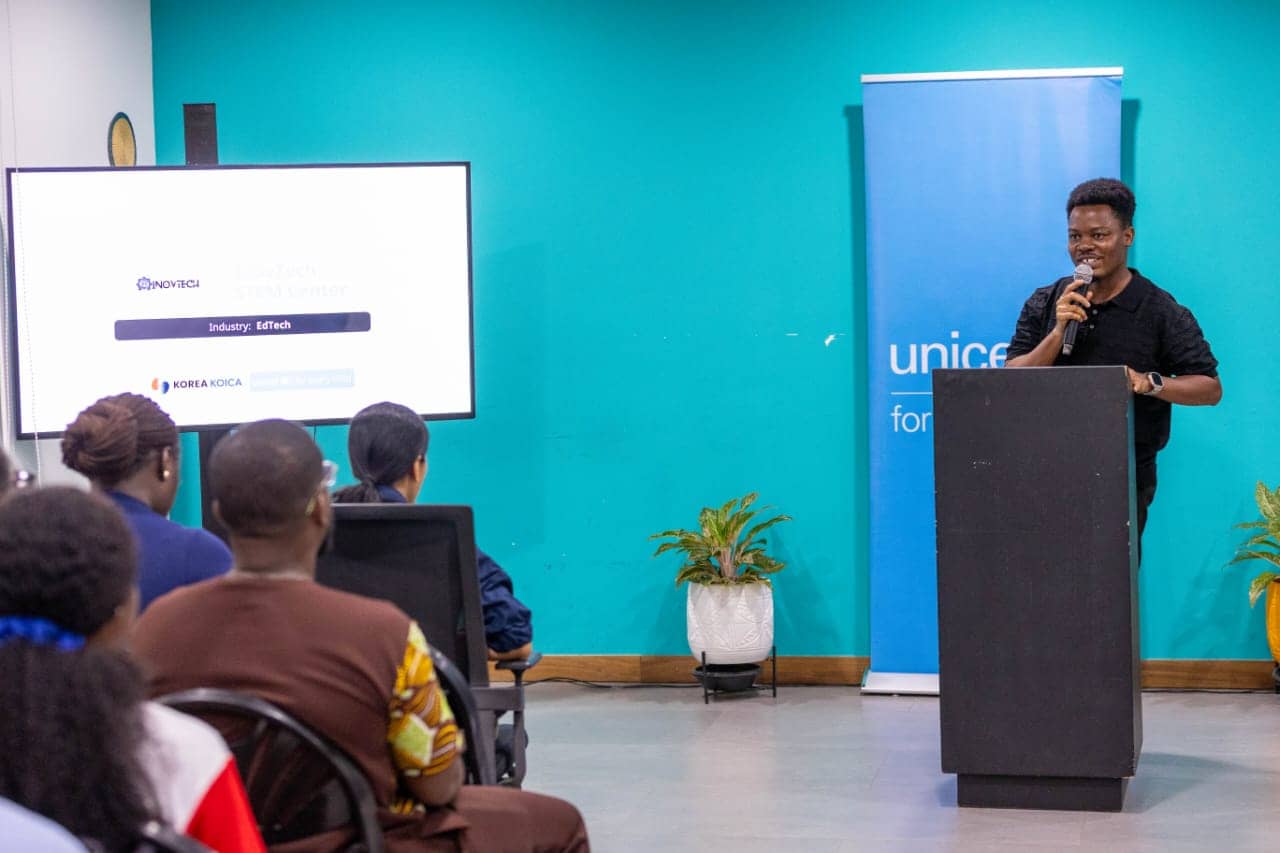
Recognition for Jonathan’s work continues to grow. In 2022, he was named a CNN African Voices Changemaker, with his work featured on global platforms including CNN and VOA. He has also participated in programmes such as the UNICEF StartUp Lab, the Mastercard Foundation EdTech Fellowship, and the American Express Leadership Academy, and was a finalist in the UN@80 Youth Innovation Challenge.
Now, in 2026, his inclusion among the QECT 100 Young Leaders places him among changemakers shaping the future across 56 Commonwealth nations.
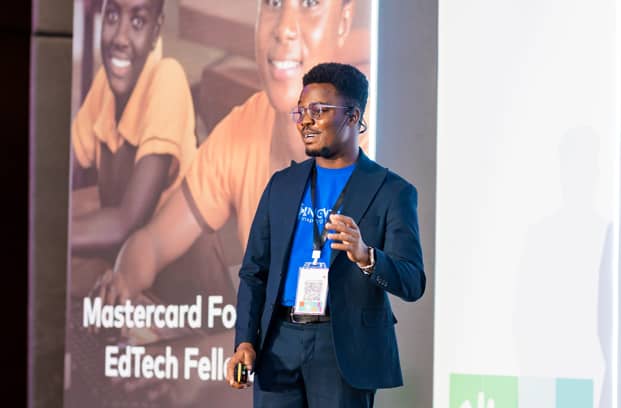
Yet for all his international visibility, what defines Jonathan is not the list of platforms he has appeared on. It is what he continues to build quietly, one classroom at a time.
His influence now extends into the rooms where Africa’s innovation future is being written. He has served as a stakeholder in Ghana’s National Science, Technology and Innovation Policy Review, contributed to the UK-Ghana Science, Technology and Innovation Strategy, and supported the National Council for Curriculum and Assessment on secondary education reform. For a young man who once had no seat in the classroom, he now helps decide what the classroom looks like.
For young people across Ghana and the wider continent, Jonathan’s story sends a clear message: your postcode, your school, and the resources you were born into do not set the ceiling for your ambitions. He has sat in international broadcast studios and in policy rooms shaping Ghana’s STEM future. He has also sat in under-resourced classrooms in Accra, teaching children to code for the first time. He brings the same energy and intention to both.
Away from the conference halls and the international stage, Jonathan still shows up in the places that first shaped him. He still visits classrooms. He still trains teachers personally. He still answers messages from students trying to teach themselves what no one around them can. It is perhaps the quietest part of his story, and in many ways the most important.
But perhaps the most telling thing about Jonathan Kennedy Sowah is not the awards. It is the fact that, amid all of it, he has never let go of the boy he used to be. The one without a computer. Without a roadmap. Without a reason to believe any of this was possible. Everything he builds now is, in some form, a letter to that boy, and to the millions of boys and girls across Africa who are still waiting for their first door to open.
For a generation of young people watching, wondering whether someone who looks like them, who started where they started, could ever truly make a difference, Jonathan Kennedy Sowah is a living, breathing answer.
He already has. And he is just getting started.