Ghana’s labour productivity has increased by 178% over the past 35 years, with the average worker producing nearly three times the value generated in 1991, according to the Ghana Statistical Service (GSS).
The updated Productivity, Employment and Growth Statistics Report covering 1991 to 2025, however, warns that the country’s productivity gains have been driven largely by capital investment, which has slowed significantly in recent years.
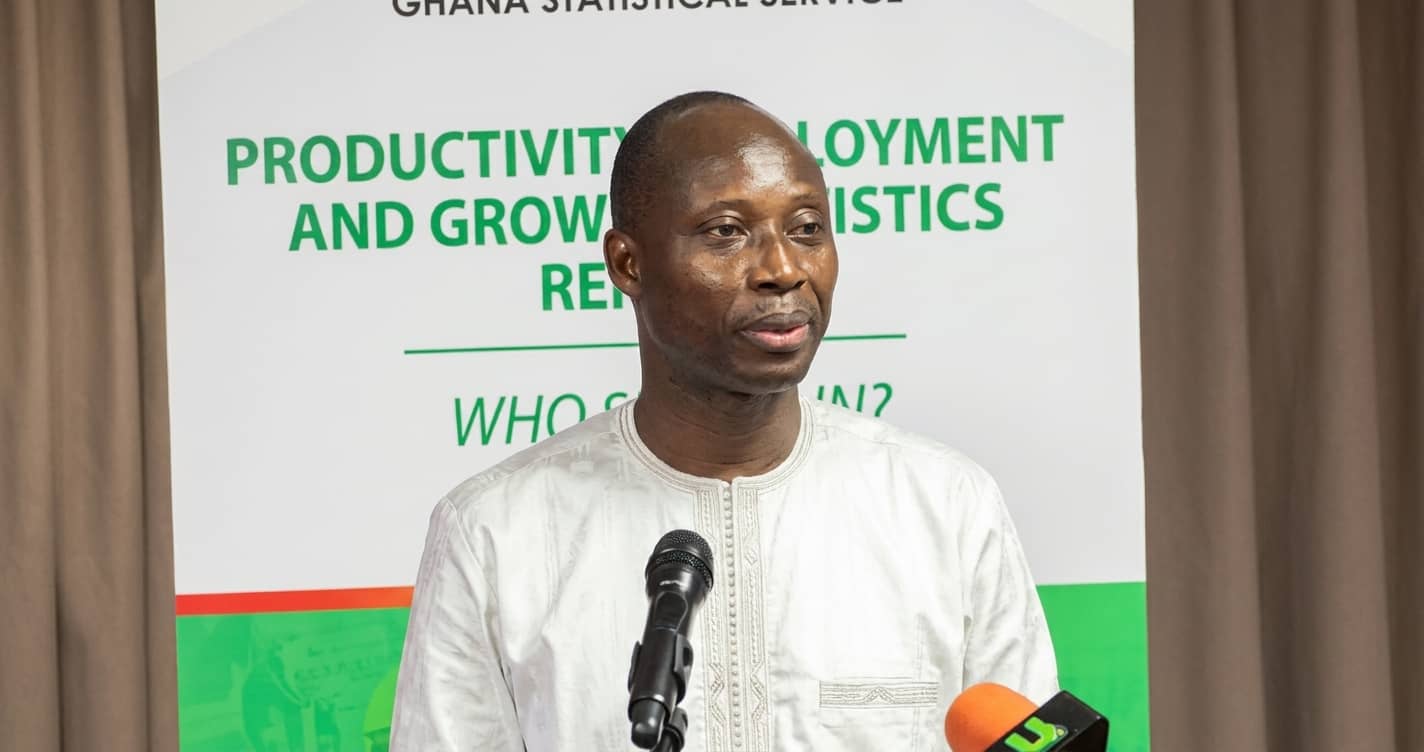
Government Statistician Dr Alhassan Idrissu said output per worker increased from about GH¢5,000 worth of value annually in 1991 to GH¢15,197 in 2025, reflecting a substantial improvement in productivity over the period.
“Between 1991 and 2025, output per worker in Ghana actually rose by 178%. In 1991, one worker produced about GH¢5,000 worth of value a year. And then in 2025, this increased to about GH¢15,000,” he said at the launch of the report.
He said Ghana’s productivity improvement was significantly higher than the performance of other African economies, noting that lower-income African countries recorded a 38% increase over the same period, while upper-middle-income African countries gained 31%.
Despite the progress, Dr Idrissu said the contribution of capital investment to productivity growth had weakened, raising concerns about the sustainability of future gains.
Capital per worker, which measures the equipment, machinery, infrastructure and other productive assets available to workers, increased nearly fourfold between 1991 and 2025.
However, its growth slowed to approximately 1% annually since 2020, compared with 4.6% in the 1990s and 6.8% in the 2010s.
“As investment slowed, productivity growth slowed with it,” he said, adding that the country would have to rely increasingly on using existing resources more efficiently.
“Our next gains must come from using what we already have better,” Dr Idrissu said.
The report also showed that the country’s economic growth had averaged 2.8% annually in the 1990s, increased to 6.6% in the 2000s, and moderated to 5.7% in the 2010s.
Between 2021 and 2025, growth averaged 6%, while the economy expanded by 6% in 2025.
Dr Idrissu said productivity remained critical to Ghana’s industrialisation agenda, skills development, digitalisation, the 24-hour economy and efforts to expand trade under the African Continental Free Trade Area.
He called for increased investment in skills, technology and management practices to strengthen productivity and competitiveness across the economy.
The report recommends restoring investment, improving productivity in sectors employing the majority of workers and ensuring that economic gains translate into improved livelihoods.