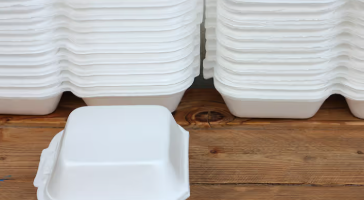
The Ghana Plastic Manufacturers’ Association (GPMA) has raised concerns about the Environmental Protection Authority’s (EPA) planned ban on Styrofoam products, warning that the January 2027 implementation deadline may have significant implications for the industry. The association is calling for a review of the timeline, proposing an extension to January 1, 2030.
In a press statement issued on June 21, the GPMA appealed to President John Dramani Mahama to intervene in the policy process, arguing that the current transition period is insufficient for industry adjustment. The association described the timeline as effectively amounting to an “indirect closure” of their businesses.
Investment and operational concerns
The association, which represents more than 171 production facilities nationwide, estimates that local manufacturers have invested about GH¢1.493 billion in plant and machinery dedicated to Styrofoam food packaging. It noted that a significant portion of this investment is financed through bank loans.
The GPMA has also argued that the equipment used in Styrofoam production cannot be repurposed for alternative materials. It stated that:
“Absolutely no Styrofoam manufacturing machine can be retooled to manufacture any of the proposed alternatives using plant-based materials,” the association declared.
It further explained that the return on investment for such machinery typically ranges between five and ten years, adding that some facilities installed new equipment within the past two years.
The association also raised concerns about financial exposure following the EPA announcement. It said:
“Since EPA’s press release, the banks have taken serious concern as to what will happen to our machinery and how to recover their loans if the machines become scrap,” the GPMA said.
Employment and sector contribution
The GPMA highlighted the role of the plastics industry in employment generation and economic activity. It stated that the sector directly employs more than 41,395 people and supports additional jobs across recycling and related industries.
It further noted:
“Total employment generation by the plastic industry is about 3.71 million, and about 92% of industries in Ghana depend on the plastic industry for all their plastic packaging needs,” the association stated.
The association also indicated that more than half of locally manufactured plastic products are exported within the ECOWAS sub-region and to other African markets, including Angola, Namibia, the Democratic Republic of Congo, and Algeria.
According to the GPMA, a sudden ban could increase reliance on imported alternatives, affect foreign exchange stability, and lead to factory closures and job losses.
Policy timeline and proposals
The EPA announced the nationwide ban on expanded polystyrene foam products on May 25, 2026, following earlier policy commitments. The directive covers the production, importation, distribution, sale, and use of Styrofoam products, with exemptions for medical and scientific applications.
The GPMA, however, indicated that it was formally informed of the policy on June 4, 2026, and maintained that the transition period of about seven months is inadequate for compliance.
While stating that it supports environmental protection efforts, the association has proposed a phased approach. It is calling for an 18-month transition period following the establishment of enabling conditions, alongside an immediate restriction on imported Styrofoam products by January 2027.
It also stated:
“These investments were made under the existing regulatory framework, and therefore, a sudden transition presents serious financial challenges,” the association stated.
In the event that the deadline is not extended, the GPMA is seeking compensation for investments made, including what it describes as a GH¢1.493 billion capital outlay.
Environmental policy approach
The association also suggested that plastic pollution should be addressed primarily through improved waste management systems rather than production bans. It referenced international examples such as Germany, South Korea, and the Netherlands, where Extended Producer Responsibility (EPR) systems and recycling frameworks have been implemented.
The GPMA cautioned that without additional measures and transitional support, the proposed ban could undermine local manufacturing and import substitution objectives.