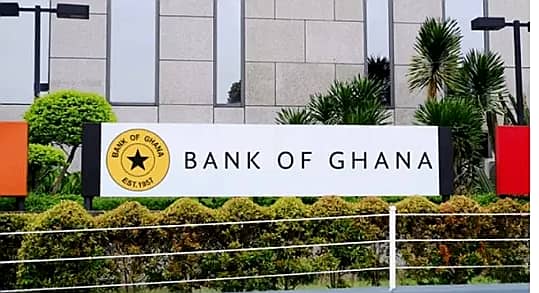
The Bank of Ghana’s Monetary Policy Committee (MPC) has unanimously maintained the Monetary Policy Rate at 14.0 percent, citing balanced risks to inflation and economic growth despite renewed global price pressures.
The decision followed the MPC’s 132nd regular meeting held from September 23 to 24, 2026, during which the Committee reviewed developments in the domestic and global economies.
Headline inflation increased to 5.0 percent in August 2026 from 4.6 percent in July, driven mainly by higher non-food inflation. Non-food inflation rose to 6.8 percent from 6.1 percent, reflecting the impact of utility tariff adjustments and elevated crude oil prices.
Food inflation, however, declined marginally to 3.0 percent from 3.1 percent, supported by improved food supply conditions. The Bank’s core inflation measure also eased to 4.2 percent from 4.3 percent.
The MPC noted that headline inflation remained below the lower bound of the medium-term target range of 6–10 percent, although it is projected to move into the target band over the coming quarters.
Economic activity remained resilient, with real GDP growth reaching 6.0 percent in the second quarter of 2026, although this was below the 6.6 percent recorded in the corresponding period of 2025. The Composite Index of Economic Activity grew by 14.9 percent year-on-year in July, compared with 6.1 percent a year earlier.
Private sector credit also recorded significant growth, rising by 35.5 percent in August from 13.3 percent in August 2025. In real terms, credit growth increased to 29.0 percent from 1.7 percent over the same period.
The banking sector remained solvent and liquid, with total assets rising 20.5 percent year-on-year to GH¢500.2 billion in August. The Capital Adequacy Ratio improved to 19.1 percent, while the Non-Performing Loan ratio declined to 15.7 percent from 20.8 percent a year earlier.
The external sector also strengthened, with the trade surplus increasing to US$8.85 billion in the first eight months of 2026 from US$6.69 billion a year earlier. Gross international reserves stood at US$12.0 billion, equivalent to 4.5 months of import cover, as of September 22.
The MPC identified higher oil prices, utility tariffs, exchange-rate pressures and global supply-chain disruptions as key upside risks to inflation, while fiscal consolidation, improved food supply and exchange-rate stability could moderate pressures.