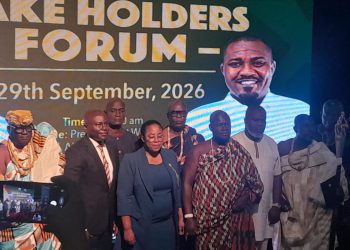
Three civil society organisations have called on the Government of Ghana to provide comprehensive public disclosure on the implementation of the GH¢30 billion Big Push Infrastructure Programme, arguing that greater transparency is needed to safeguard public funds and strengthen accountability.
BudgIT Ghana, the Integrated Social Development Centre (ISODEC), and Revenue Mobilisation Africa (RMA) said the ambitious infrastructure initiative, unveiled in the 2026 Budget, should be accompanied by detailed information on project allocations, procurement processes, contract awards, financing sources, implementation timelines, and progress reports to enable effective public oversight.
In a joint statement, the organisations described the Big Push Programme as one of the largest public infrastructure investment initiatives in Ghana’s recent history, noting that its scale has generated significant public interest.
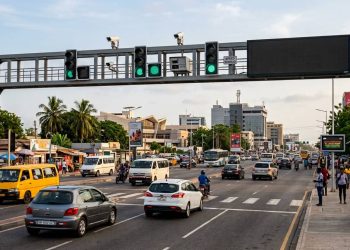
The government has earmarked GH¢30 billion for the programme to finance major infrastructure projects aimed at boosting economic growth, improving productivity, and creating jobs through investments in roads, bridges, ports and logistics corridors.
According to the 2026 Budget, projects under the programme were selected based on economic viability, regional equity and alignment with the government’s 24-Hour Economy agenda.
The budget also indicates that Parliament approved multi-year commitments for 33 road projects under the initiative, with most expected to be completed by mid-2027. Among the flagship projects identified are the Accra-Kumasi Expressway and the Ekye Amanfrom-Adawso Bridge.
The CSOs noted that information available on the Ministry of Roads and Highways’ website shows that contracts for several construction projects were awarded in 2025. The ministry states that work has commenced on 50 projects covering 1,144 kilometres, while 77 road projects are currently under execution, including 54 new projects under the Big Push Programme and 23 ongoing road projects.
Although the ministry has published details such as project descriptions, regions, implementing agencies, contract sums, contractors and award dates for some road projects, the organisations argued that significant information remains unavailable to the public.
They expressed concern that there is no consolidated framework providing a complete list of all projects under the programme or explaining how projects were selected, how contractors were procured, how funds are being allocated, and how implementation will be monitored.
The groups further said the absence of detailed project timelines makes it difficult for citizens to assess whether projects are progressing as planned or to identify delays and cost overruns.
They also pointed to government’s intention to finance part of the programme using the Annual Budget Funding Amount (ABFA) derived from petroleum revenues, alongside other extractive sector resources, saying the financing approach warrants greater public disclosure.
Jennifer Addochoe Moffatt, Country Director of BudgIT Ghana, said the programme’s development potential must be matched by a commitment to transparency.
“The Big Push Programme does have the potential for real development in Ghana, but transparency cannot be replaced with promises. Citizens are entitled to know what has been approved, how much is going to each project, and what the timelines are; otherwise, there is no accountability and no way for citizens to know that public funds are being spent as intended.”
BudgIT Ghana, ISODEC and RMA are urging government to establish a publicly accessible and regularly updated disclosure portal covering all projects under the programme.
They said the portal should include information on project scope, location, implementing agencies, approved budgets, financing sources, procurement methods, contractors, award dates, expected completion dates and implementation status.
They also called for project-specific financial disclosures showing how resources from the national budget, petroleum revenues, mineral royalties, borrowing and public-private partnerships are being allocated across sectors.
In addition, the CSOs want government to publish procurement documentation for all Big Push projects, including tender notices, evaluation reports, contract awards and subsequent variations. They further proposed a comprehensive implementation framework outlining project milestones, delivery targets, responsible institutions and reporting standards.
The organisations also recommended quarterly reports to Parliament and the public on capital expenditure execution under the programme, supported by financial and procurement documentation in accordance with the Public Financial Management Act.
The groups said enhanced transparency would strengthen public confidence, improve oversight and help ensure that the Big Push Infrastructure Programme delivers measurable and equitable development outcomes for Ghanaians.
They added that they remain ready to collaborate with government, Parliament and development partners to promote accountability throughout the implementation of the programme.
[doc id=’39159′]