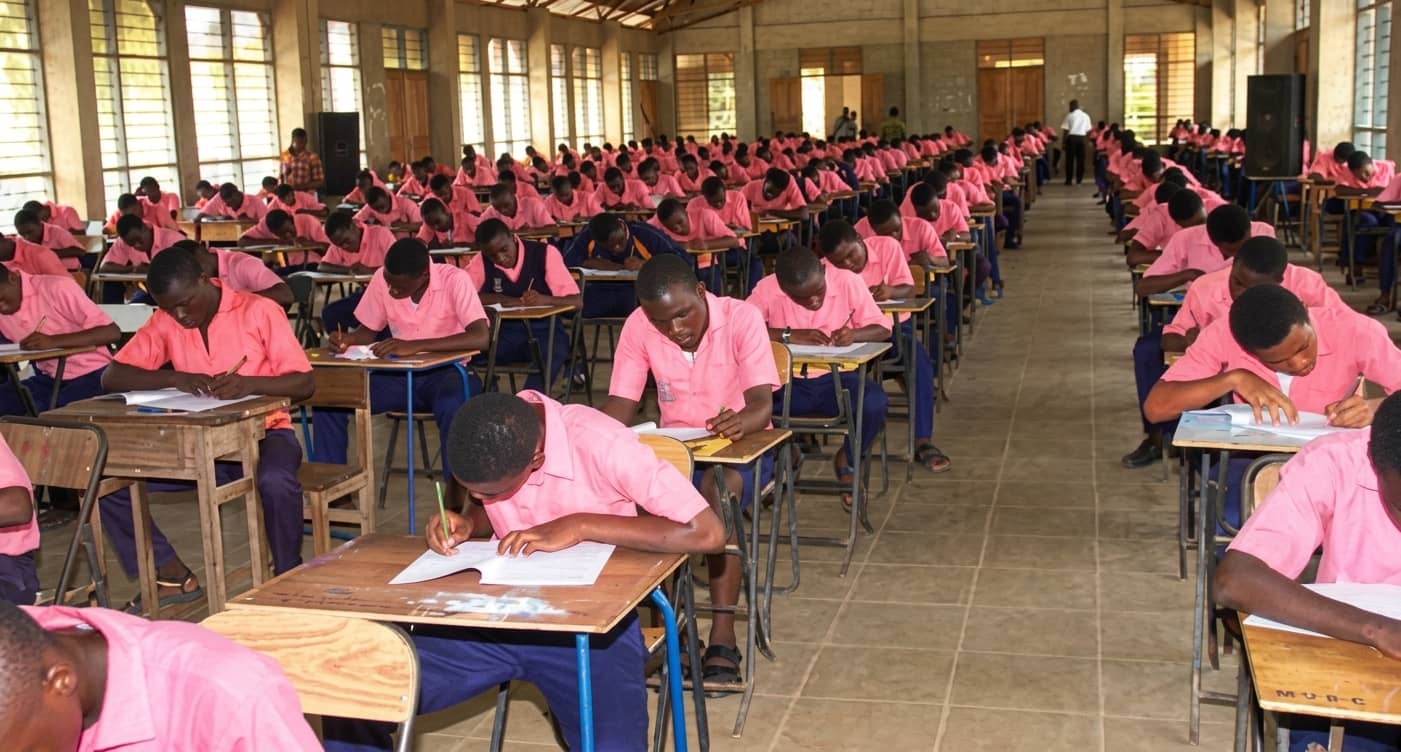
Majority of Ghanaians believe the Double-Track System has contributed to declining education quality at the senior high school level, while supporting government borrowing to construct additional school infrastructure and ultimately phase out the system, a nationwide poll by the Institute of Economic Affairs (IEA) has found.
According to the poll, 64.7 per cent of respondents said the Double-Track System has negatively affected the quality of SHS education, with only 20.2 per cent believing it has improved quality.
The findings were contained in an IEA press release dated September 15, 2026, following a nationwide socioeconomic poll conducted in August 2026.
The poll surveyed 1,062 respondents across all 16 regions of Ghana to assess public perceptions of the Double-Track System and the government’s proposal to borrow funds to construct additional SHS infrastructure.
The Double-Track System was introduced in 2018, following the implementation of the Free SHS policy in 2017, to accommodate increased enrolment amid inadequate school infrastructure.
The IEA said the arrangement enabled more students to access secondary education but had raised concerns about the quality of education.
“Although the system enabled more students to access secondary education, the poll suggests that many Ghanaians believe this expansion in access has come at the expense of education quality,” the Institute stated.
The poll further found that 54.3 per cent of respondents supported government borrowing to build more schools and eliminate the Double-Track System, while 38.4 per cent opposed the proposal. Another 6.2 per cent expressed no opinion.
The IEA said the support for additional borrowing could partly reflect the continued pressure on existing SHS infrastructure arising from high enrolment levels.
“For many Ghanaians, expanding school infrastructure appears to be necessary to address the capacity constraints associated with the implementation of Free SHS,” it noted.
Among respondents who believed the Double-Track System had reduced the quality of education, 60.8 per cent supported government borrowing to construct additional SHS infrastructure, while 38.4 per cent opposed the proposal.
The Institute said the finding suggested that a significant proportion of respondents dissatisfied with education quality viewed expanded infrastructure as an important means of improving secondary education.
However, the IEA acknowledged that opposition to additional borrowing reflected concerns about Ghana’s public debt burden.
“For these respondents, expanding SHS infrastructure through additional borrowing could further increase pressure on public finances,” the Institute stated.
It said such respondents would prefer the government to explore alternative financing mechanisms for constructing additional school infrastructure.
The IEA said the findings pointed to public support for expanding SHS infrastructure while highlighting the need for government to carefully consider the fiscal implications of financing the expansion through borrowing.