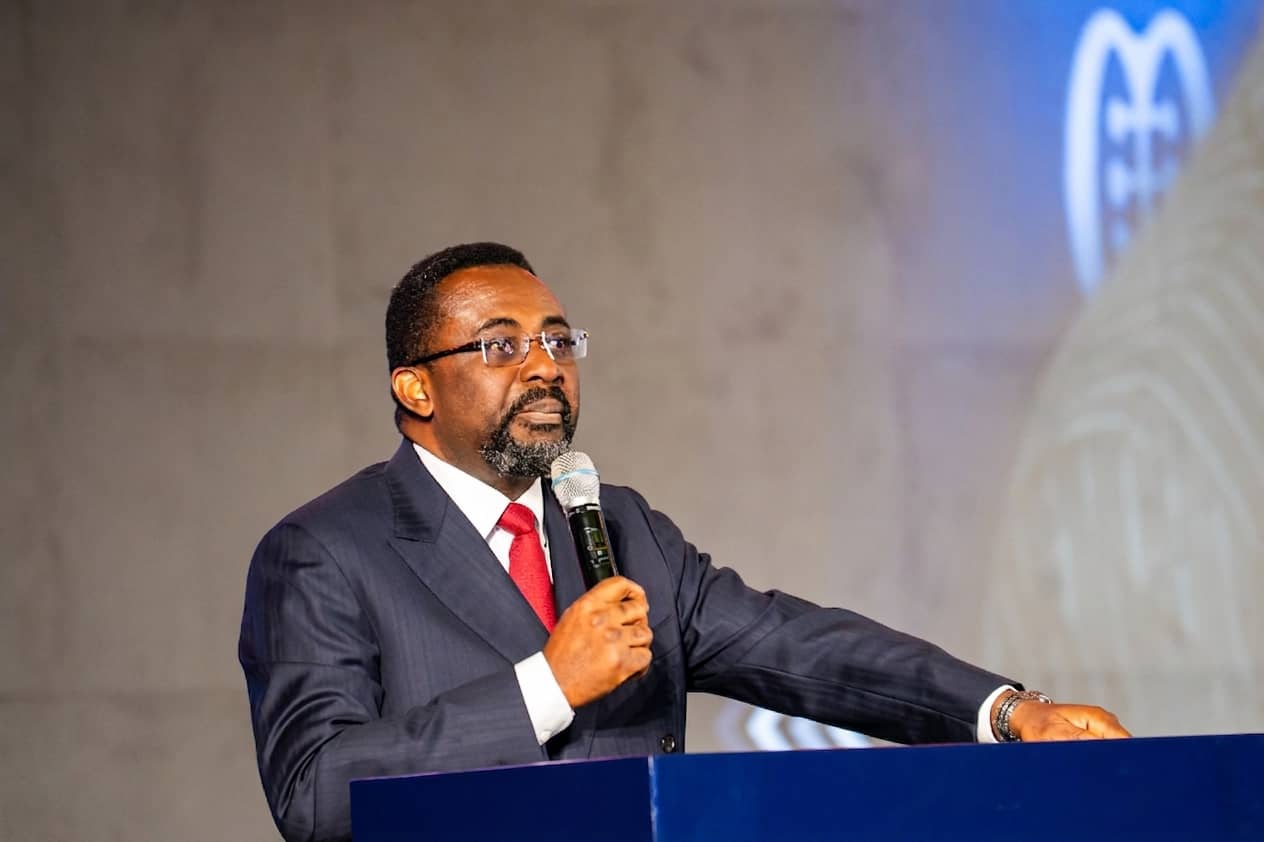
The Governor of the Bank of Ghana, Dr. Johnson Pandit Asiama, has declared that emerging economies such as Ghana are no longer merely adopting global financial systems designed elsewhere, but are increasingly helping to shape the future architecture of global finance.
Speaking at the opening of the 64th ACI World Congress 2026 at the Kempinski Hotel Gold Coast City in Accra on Thursday, Dr. Asiama said the global financial landscape was undergoing a major shift, with innovation increasingly originating from emerging markets rather than traditional financial centres.
The two-day congress is being held on the theme, “Elevating Markets, Empowering People.”
Addressing delegates from more than 60 countries, the Governor pointed to Ghana’s recent economic recovery as evidence of the importance of stability in building modern financial systems.
He recalled that inflation in Ghana had peaked at 54.1 per cent in December 2022, while international reserves had weakened amid debt management challenges. However, he said difficult policy decisions taken by the central bank and the Ministry of Finance had helped restore macroeconomic stability.
According to him, inflation had declined to 3.4 per cent by April this year, while international reserves had risen to nearly US$14 billion, equivalent to almost six months of import cover.
“Our banking system that has been recapitalized and once again lending to the private sector is recovering,” he said, cautioning, however, that global geopolitical tensions and economic uncertainties continued to pose risks to policymakers.
Dr. Asiama argued that stability should not be viewed as an end in itself, but rather as the foundation upon which stronger financial systems could be built.
He identified three major trends reshaping financial markets across emerging economies — digital payments, regulatory innovation and regional financial integration.
On digital payments, the Governor said payment systems were no longer merely operational infrastructure but had become central gateways into formal finance. He highlighted Ghana’s interoperable payment ecosystem, mobile money integration, QR code interoperability and settlement systems as examples of reforms positioning the country as a regional reference point.
He further disclosed that the pilot phase of the eCedi central bank digital currency project had been completed, with authorities now exploring its application for cross-border settlements and wholesale transactions.
Dr. Asiama also stressed the importance of credible regulation in sustaining innovation in digital finance, saying weak regulatory systems often led to fragmentation and loss of trust.
He referenced Ghana’s Digital Asset Service Providers Act, passed in 2025, as part of efforts to strengthen oversight in the rapidly evolving digital finance space.
On regional integration, he called for harmonised payment systems and regulatory frameworks across Africa to support seamless financial transactions.
“A payment initiated in Accra should clear in Abidjan or Lagos just as easily as it clears in Kumasi,” he said.
The Governor said Ghana was positioning itself not only as a participant in global financial reforms, but also as a contributor to the redesign of emerging financial systems.
He urged delegates at the congress to focus discussions on building resilient financial systems capable of adapting to future global changes.