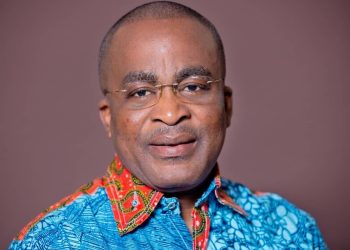
A proposal to introduce fee-paying boarding in Category A senior high schools to generate funding for the expansion of elite public secondary education has received support from the Executive Director of Africa Education Watch, Kofi Asare.
Mr Asare said the proposal, attributed to former NAGRAT President Angel Carbonu, could help address the growing demand for Category A schools and the limited number of institutions currently meeting the standard.
In a Facebook post, Mr Asare said about 60 per cent of candidates compete for Category A schools, although the institutions have the capacity to accommodate only about 10–12 per cent of candidates.
He described the situation as a reflection of rising educational aspirations and changing education preferences in Ghana.
“There is nothing wrong with that. In fact, it is a symptom of the rising educational aspirations and changing education tastes of a middle-income country,” he said.
Mr Asare, however, noted that fewer than 100 of Ghana’s approximately 1,000 public second-cycle schools meet the Category A standard, attributing the shortfall to inadequate funding for construction and upgrading, as well as competing demands from basic and tertiary education.
Proposed financing model
According to him, the proposal would involve making boarding in Category A schools fee-paying, with the revenue used to build or upgrade more schools to the standard.
He recalled that the Education Watch initiative had proposed in 2022 that 50 per cent of Category A admissions be privatised, while the remaining 50 per cent would continue under regular free SHS admissions.
Using an estimated Category A student population of 100,000 and an annual boarding fee of GH¢20,000, Mr Asare calculated that the model could generate approximately GH¢2 billion annually.
He further estimated that constructing a standard Category A school with a boarding capacity of 3,000 students would cost about GH¢100 million, although upgrading existing schools from Category C to Category A would require significantly less funding.
Based on those estimates, he said the revenue could potentially finance the construction of 20 new Category A schools annually, particularly in underserved regions such as Oti, Western North and Bono East.
“Within five years, we could have 100 new Category A schools from private financing sources to complement what our taxes can do,” he said.
Addressing regional disparities
Mr Asare said the proposed financing model could help change the geographical distribution of elite public secondary education in Ghana.
He pointed to Oti and North East as regions he said had no Category A schools, arguing that directing investment towards deprived regions could expand access to quality facilities.
He also clarified that the Category A classification was not solely based on academic performance, but included the quality of school facilities.
“A Category A school is not just about performance. Almost all Adutwum’s STEM schools are A, yet no performance history. It’s the facility quality we are talking about here,” he said.
Mr Asare said the proposal could enable wealthier families to contribute towards expanding elite education infrastructure in poorer regions.
“In other words, we could use the ability of wealthier families to pay for boarding to expand the geographical footprint of elite education to poor regions,” he said.
Despite describing the economics of the proposal as compelling, Mr Asare expressed doubts about its implementation, citing party politics as a potential obstacle.
“The economics of the proposal are compelling, but this proposal will probably not work because of party politics,” he said.