The Institute for Liberty and Economic Education (ILEE) has launched the maiden Nyansapo Fellowship, a programme aimed at equipping university students and young graduates with practical skills in policy analysis, advocacy and strategic communication.
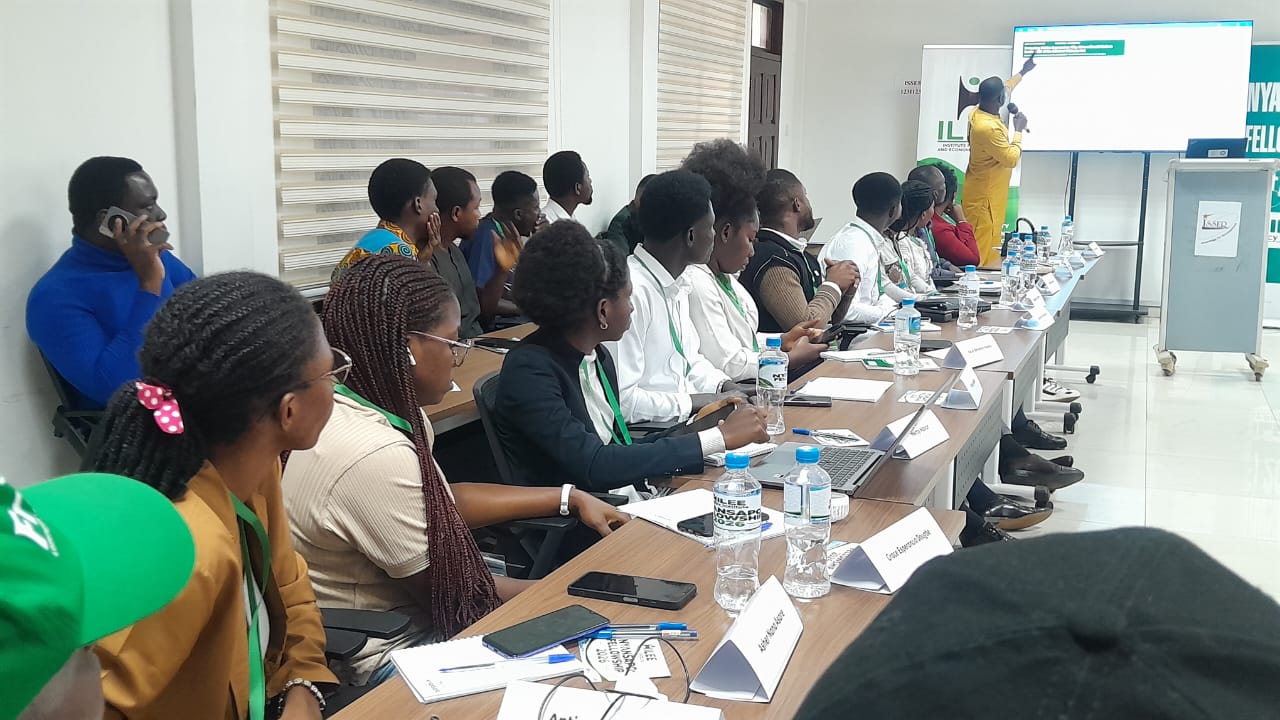
The fellowship, held at the ISSER Auditorium of the University of Ghana on October 3, 2026, was organised under the theme “Leadership, Advocacy, and Strategic Communication” in partnership with the Atlas Network and Nyansapo Fund.
The programme forms part of ILEE’s efforts to create a pipeline of young people capable of examining public policies, identifying regulatory barriers and advocating for reforms that support entrepreneurship, individual freedom and economic development.
Executive Director of ILEE, Eric Coffie, said the fellowship was conceived to bridge the gap between university education and practical participation in policy processes.
He described the programme as one of ILEE’s flagship initiatives and said participants were being trained to identify regulations and policy decisions that could become barriers to entrepreneurship and economic development.
“The Nyansapo Fellowship is to remove these barriers, these regulations,” Mr Coffie said.
He said the fellowship was not intended to be a one-off programme, announcing plans to organise it annually and extend participation to students from private universities.
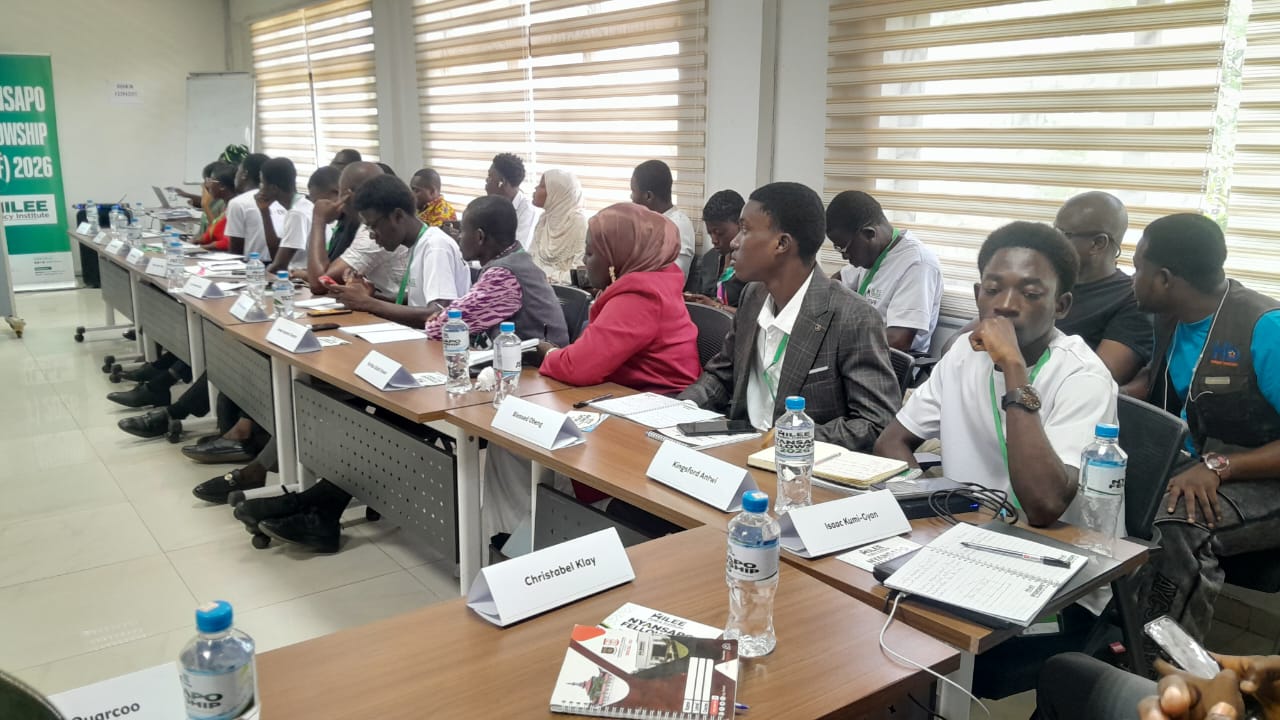
Mr Coffie said the country needed more young people to take an interest in policy because decisions affecting national development were often made outside the areas that attracted the most attention from young people.
Vice President of Imani Africa, Kofi Bentil, was among the speakers at the event, where he addressed participants on law, free-market principles, fundamental rights, the social contract and the concept of a good society.
He said the fellowship provided an important platform for young people to gain knowledge that might not be available through conventional academic curricula.
“It inspires the youth and it helps them to also know how to connect with the system,” Mr Bentil said.
He also engaged participants on freedom of expression, arguing that the state should be cautious about using its powers to criminalise speech, particularly where conduct does not constitute a criminal offence.
“If somebody feels aggrieved by anybody’s speech, that person has a right within law to defend themselves and take them on,” he said.
Mr Bentil further defended dedicated bus lanes for public transport, arguing that prioritising buses could improve urban mobility because they carry significantly more people than private vehicles.
“Fifty people should be given priority over one person,” he said, referring to the relative number of passengers carried by a public bus compared with a private car.
Communications consultant Conrad Kakraba also trained participants on advocacy and strategic communication, focusing on policy briefs, media engagement, message framing and the use of civil society and pressure groups.
He said effective communication was essential if policy proposals were to move from theory to implementation.
“You may have the most brilliant ideas, but if you cannot advocate for it, there is nothing that can make the idea come to life,” Mr Kakraba said.
The organisers said the fellowship would provide participants with technical policy-evaluation tools, legal reasoning, media framing skills and market-based economic principles to enable them to participate more effectively in Ghana’s policy and regulatory debates.