Vice President of Imani Africa, Kofi Bentil, has urged young Ghanaians to take a greater interest in public policy, democratic governance and the institutions that shape society, saying many important lessons about how systems work are not adequately covered in formal education.
He said programmes that expose young people to practical discussions on law, rights, governance and economic principles were critical to preparing them to participate meaningfully in national affairs.
“Some of the things that are discussed here are not discussed in school. They are not part of any particular curriculum but they are very important for understanding the system, how it works, and how you can engage with it,” Mr Bentil said.
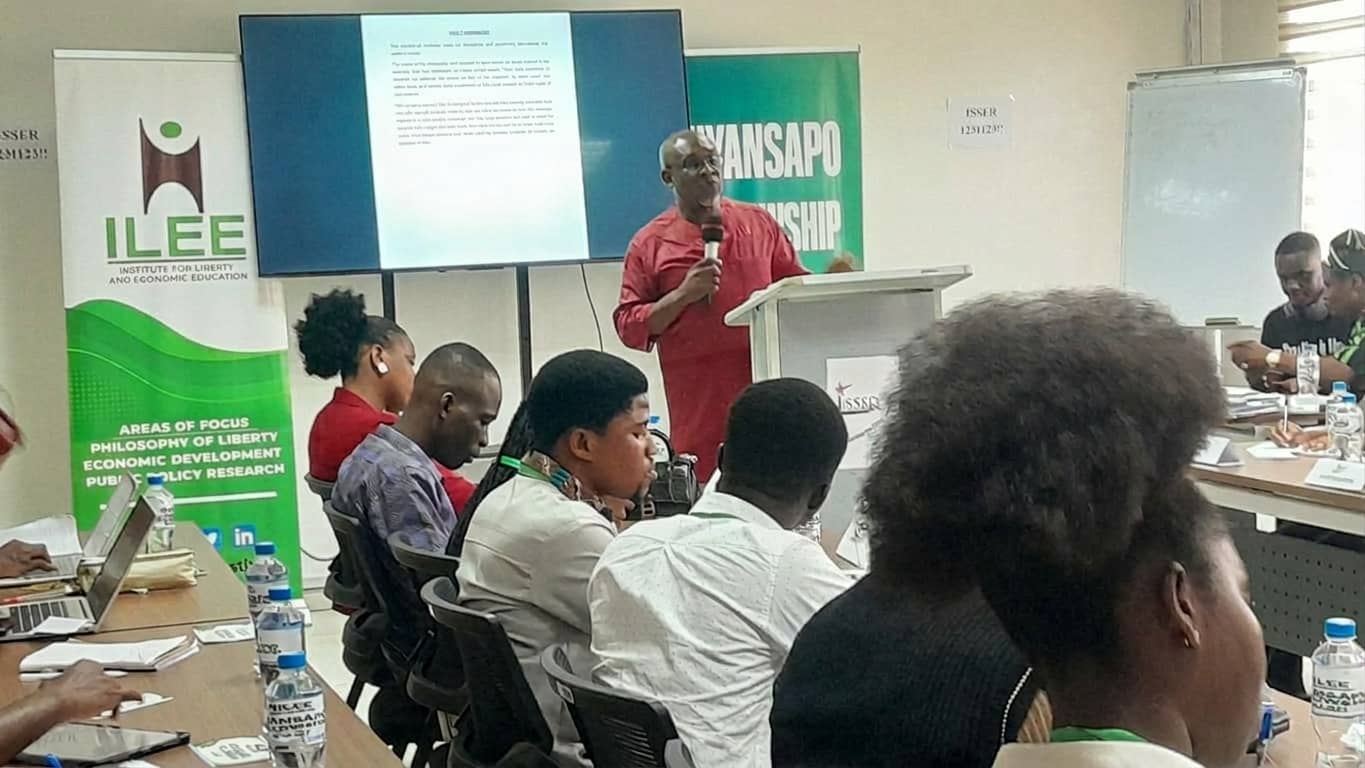
He was speaking at the maiden Nyansapo Fellowship organised by the Institute for Liberty and Economic Education (ILEE) at the ISSER Auditorium of the University of Ghana on Saturday, October 3, 2026.
The fellowship, held under the theme “Leadership, Advocacy, and Strategic Communication”, brought together university students and young graduates for discussions and training on policy analysis, advocacy, legal reasoning, strategic communication and free-market principles.
Mr Bentil said the need for such programmes was particularly important because some of the participants would eventually occupy positions of influence and responsibility.
“Very soon some of the people here are going to be in charge and they need to know what am I doing, why am I doing it, when can I do what,” he said.
He also argued that democratic governance, despite its limitations, remained preferable to military rule, pointing to Ghana’s historical experience and the country’s periods of economic and social progress under civilian governments.
“The best times in our life as a country, the times when we have had the best economic progress and social progress, have been under civilian rulers, not under military rulers,” Mr Bentil said.
He urged Ghanaians to remain patient with democratic institutions while holding elected leaders accountable and using elections to change governments.
“The politicians…come and seek our votes every four years, who we can influence. They come from amongst us,” he said.
Mr Bentil also advocated a broader approach to Ghanaian history, arguing that national narratives should recognise the contributions of several individuals and movements rather than focus predominantly on one historical figure.
While describing Ghana’s first President, Kwame Nkrumah, as “the greatest leader we have ever had” and “the greatest African of the last century”, he said other figures who contributed to the country’s political development should also be remembered.
Meanwhile, Executive Director of ILEE, Eric Coffie, said the Nyansapo Fellowship was designed to address a gap in Ghana’s policy environment by creating a pipeline of young people equipped to analyse and advocate for policy reform.
He said the programme sought to train participants to identify regulations and policy decisions that could hinder entrepreneurship and economic development.
“We need to introduce young people and everybody become interested in policy, because policy is one of the very vital things in our nation,” Mr Coffie said.
He said ILEE intended to make the fellowship an annual programme, with plans to extend participation beyond public universities to private institutions.