The government has renamed its planned 24-hour economy markets as “district economy markets”, saying the change is intended to avoid creating the impression that the government’s broader 24-hour economy programme is focused only on markets.
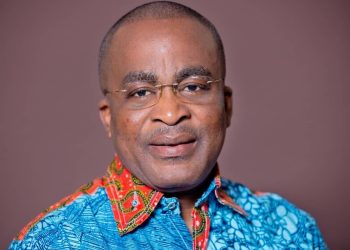
The Minister for Local Government, Chieftaincy and Religious Affairs, Mahama Ayariga, said the decision was taken to give the market development programme a clearer identity within the government’s wider economic agenda.
“We call them district economy markets,” the minister said, explaining that the earlier description could wrongly suggest that the 24-hour economy programme was primarily about establishing markets.
The district economy markets programme is expected to establish model markets across all 261 Metropolitan, Municipal and District Assemblies (MMDAs), with projects currently at different stages of development.
The minister said the government’s target was to achieve 100 per cent completion by 2028, with the projects being implemented in phases.
The first phase will focus on the construction of market stores, sheds and other commercial spaces to provide improved trading infrastructure for local businesses.
The second phase is expected to add supporting facilities, including police and fire stations and other social amenities, to make the markets safer and more functional.
Hon. Ayariga said the government was also assessing contractors involved in the projects, with those lacking the capacity to complete their assignments facing possible termination and reassignment of their contracts.
He cited the Kumasi Central Market/Kumasi Kejetia Phase Two project, which he said had stalled for nearly two years and was about 60 per cent complete. According to him, the Finance Minister had approved the resumption of work, while discussions were ongoing on Phase Three.
The minister stressed that the government did not intend to impose a uniform design on every district, saying local circumstances and needs would determine the nature of each market.
He said traditional rulers, market women and other stakeholders would be involved in selecting sites for the projects.
One of the major challenges, he noted, was the temporary relocation of traders during construction, particularly because some traders feared losing their spaces when new markets were completed.
He said the government intended to register traders and provide assurance that existing traders would be accommodated in the new facilities.
Hon Ayariga also said fire safety considerations were being incorporated into the design of the new markets, including the provision of fire stations where possible.