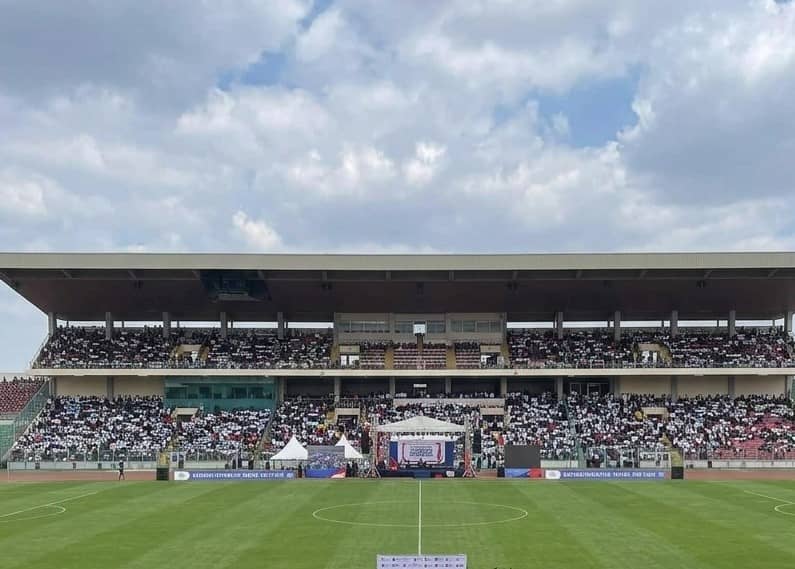
Election Watch Ghana has commended the New Patriotic Party (NPP) for the peaceful conduct of its delegates’ election but raised concerns over the cost of internal party elections, gender representation, security arrangements and the growing influence of money in candidate selection.
In a report on the NPP delegates’ election, the organisation said the exercise was an important component of Ghana’s democratic process and demonstrated the party’s commitment to internal democracy and participation.
It also commended the Electoral Commission for what it described as the professional management of the election, while recognising the security agencies for maintaining peace and order.
However, Election Watch Ghana questioned the sustainability of deploying more than 3,000 police officers for a single internal party election.
“While the security of elections remains paramount, there is a need to continuously assess and refine security arrangements to ensure that they are proportionate, efficient, and sustainable,” it said.
The organisation also expressed concern about the representation of women in the NPP’s leadership, noting that only one woman was among the elected executives.
“If Ghana is to achieve meaningful inclusion in political governance, deliberate efforts must be made to create greater opportunities for women to participate in decision-making at all levels,” the report said.
Election Watch Ghana further called for reforms to address the rising cost of internal party elections, arguing that expenses related to transportation, feeding and accommodation of delegates could place significant financial burdens on candidates.
It suggested that political parties centrally organise and finance the basic logistical needs of accredited delegates to help create a more level playing field and reduce the influence of money in internal contests.
The organisation also urged delegates to place greater emphasis on candidates’ ideas, competence, character and track records rather than financial capacity, political connections or personal influence.
“Political leadership should ultimately be about vision, competence, character, service, and the ability to develop and implement policies that improve the lives of citizens,” it said.
Election Watch Ghana said the quality of internal party elections has implications beyond political parties, stressing that Ghana’s democratic strength depends partly on the quality of democracy practised within political organisations.
It called for greater emphasis on electoral education, specialised election-security training, gender inclusion and the selection of leaders based on ideas and competence.