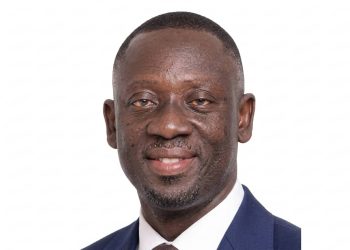
A civic group, The People’s Forum, has called on the Chief Justice of Ghana, Paul Kwadwo Baffoe-Bonnie, to take urgent steps to safeguard the independence and institutional credibility of the Judiciary, warning that growing public perceptions of executive proximity could undermine confidence in the courts.
In an open letter dated June 18, 2026, and addressed to the Chief Justice, the group stressed that the Judiciary remains “the last refuge of the citizen who has no one else to turn to” and must therefore be protected from both actual and perceived political influence.
“The judiciary, Your Lordship, is not merely a branch of government. It is the last refuge of the citizen who has no one else to turn to. It is the sacred wall between arbitrary power and individual liberty,” the letter stated.
The group argued that even the perception of closeness between the Judiciary and the Executive risks weakening public trust, noting that “the moment that wall is perceived, even merely perceived, to be porous, the consequences for public confidence, democratic order, and social cohesion are severe and lasting.”
The letter further referenced constitutional provisions on judicial independence, particularly Article 127 of the 1992 Constitution, stressing that independence must extend beyond actual decision-making to include how the Judiciary is perceived by the public.
It stated that judicial independence includes “both subjective impartiality, the actual state of the judge’s mind, and objective impartiality, whether a reasonable, fair-minded observer would conclude that the judge might be influenced by extraneous considerations.”
According to the group, recent public concerns have centred on what it describes as a “pattern of proximity to the Executive,” including attendance at social and official government-linked events, which it argues could create perception risks for the Judiciary.
“The concern is not about a single incident. It is about a glaring pattern of social and public proximity to the government that appointed you,” the letter said.
It added that the Chief Justice’s role requires a higher standard of conduct, stressing that “the Chief Justice is not an ordinary citizen. The standard to which the head of the Judiciary is held is not the standard of the ordinary.”
The group warned that failure to address such perceptions could have long-term consequences for Ghana’s democracy, arguing that when citizens begin to view the courts as aligned to political power, “the rule of law loses its legitimacy.”