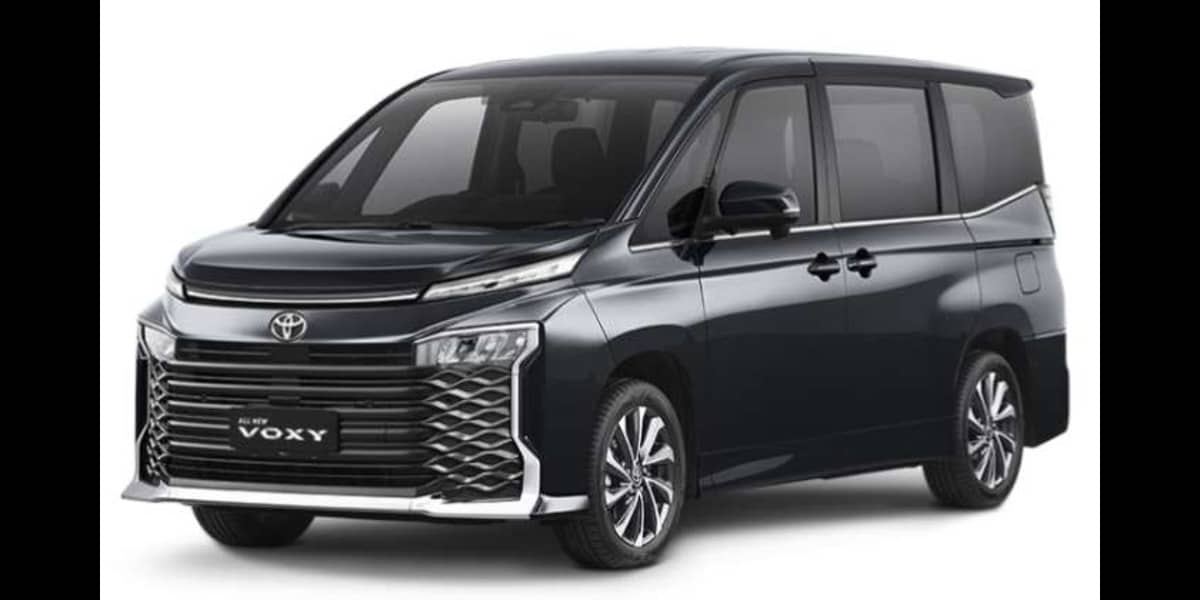
The National Road Safety Authority (NRSA) has declared the use of Toyota Voxy vehicles for commercial passenger transport illegal, citing major safety risks, structural limitations, and widespread regulatory breaches in Ghana’s transport sector.
Presenting the Technical Working Committee’s final report in Accra on Wednesday, April 8, Chairman Godwin Kafui Ayetor said the growing use of the minivans as public transport poses a serious threat that requires urgent regulatory action.
According to him, the vehicle, originally manufactured for private family use, is not suitable for commercial operations, particularly under Ghana’s road conditions.
“The manufacturer informed us that the Toyota Voxy is a minivan designed for young middle-class families, not for commercial passenger use. In other words, it is not designed for high mileage and is intended for use on paved roads,” he said.
Dr Ayetor explained that the risks are even more pronounced when the vehicles are used for long-distance travel or rough terrain.
“Once off-road conditions come into play, the recommendation is to use vehicles such as the Toyota Hiace, which are specifically built for commercial applications,” he stated.
The committee further raised concerns over extensive structural modifications carried out on many of the vehicles, particularly during conversion from right-hand drive to left-hand drive systems. These alterations, often done by unlicensed operators, were found to significantly compromise safety.
“As part of the conversion, the suspension is altered and the vehicle is raised. The tyres are also changed. However, the tyres that come with the Toyota Voxy are passenger tyres, not designed for high payload or high mileage,” he explained.
Beyond technical concerns, the report identified what it described as a “systemic breakdown” in enforcement and regulation, which has allowed unsafe vehicles to enter the market and operate as commercial transport.
“We observed a systemic regulatory breakdown, which has led to the proliferation of these conversions. These vehicles are often unlawfully imported, improperly converted, and operated as commercial transport, posing serious safety risks,” Dr Ayetor stated.
He warned that thousands of such vehicles may already be operating across the country without meeting required safety standards.
“We have allowed thousands of unlawfully imported vehicles to enter the country, be modified without standards by uncertified practitioners, registered without proper testing and inspection, and operated commercially despite private registration in some cases,” he added.
In its final determination, the committee concluded that the continued use of the Toyota Voxy in its modified form for commercial passenger transport presents an unacceptable risk to road safety.
However, the decision has been strongly rejected by the Commercial Transport Operators of Ghana, who described the move as “lazy and ill-conceived.”
In a statement, the group criticised the NRSA’s approach, arguing that it fails to address the root causes of road accidents.
“Commercial Transport Operators of Ghana view the National Road Safety Authority’s (NRSA) decision to ban the Toyota Voxy for commercial purposes as a lazy and ill-conceived approach to addressing road safety concerns. We strongly condemn this move and urge the NRSA to reconsider.”
They argued that instead of imposing a blanket ban, the Authority should prioritise driver education, stakeholder engagement, and targeted safety interventions.
“Rather than engaging in blanket bans, the NRSA should focus on educating drivers on road safety tips and organising seminars to enhance their skills. The Toyota Voxy is a popular and reliable vehicle, widely used for commercial transport, and its ban will cause significant hardship for many families.”
The operators further demanded a review of the decision and engagement with stakeholders, urging the Authority to focus on infrastructure challenges and training.
“We demand that the NRSA: – Reconsider the ban and engage with stakeholders – Develop targeted safety measures for high-risk areas – Prioritise driver education and training – Address root causes of accidents, such as poor road infrastructure.”
They warned that they would resist the directive if it is not reconsidered.
“This decision reflects a lack of understanding of the transport sector’s complexities. We will not support this shameful idea and will take all necessary steps to protect our members’ interests,” the statement signed by Asomaba Nana Wiredu, National Chairman of the Commercial Transport Operators of Ghana, added.