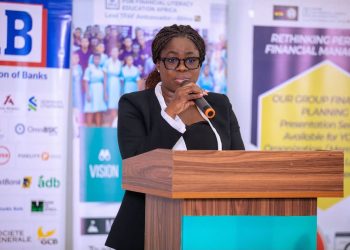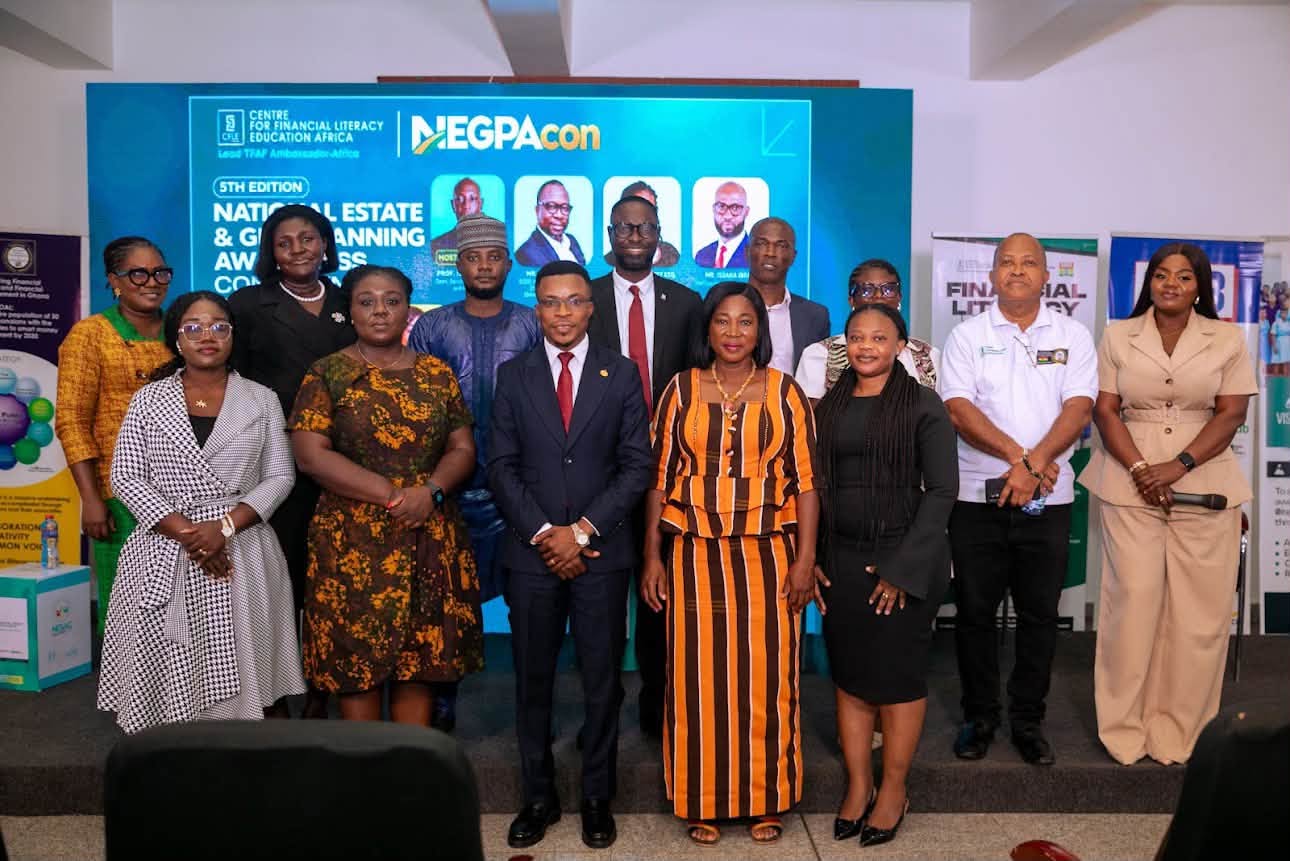
Chairman of the Advisory Board of the Centre for Financial Literacy Education Africa (CFLE Africa), Mr John Awuah, has urged Ghanaians to prioritise estate and gift planning to ensure that their assets are preserved and transferred to intended beneficiaries.
He said proper estate planning was essential to preventing family disputes, sustaining businesses beyond their founders and preparing future generations to manage inherited wealth responsibly.
Mr Awuah made the call at the fifth edition of the National Estate and Gift Planning Awareness Conference (NEGPAcon 2026), held at the University of Professional Studies, Accra (UPSA), on October 9.
The two-day conference was organised by CFLE Africa under the theme, “From Wealth Creation to Wealth Transfer: Preserving Intergenerational Wealth to Enhance Economic Development and Prosperity”.
Mr Awuah said businesses established and successfully operated for decades could struggle after their founders’ deaths if appropriate succession arrangements had not been put in place.
“Can you imagine setting up a business and running it for 30 years, 40 years, a successful business at that, and on your passing of leaving the scene, the business engaged in struggle?” he asked.
Mr Awuah who doubles as the Chief Executive Officer of the Ghana Association of Banks (GAB), said the difficulties were sometimes not caused by weaknesses in the business model but by the absence of concrete plans to transfer ownership, preserve the founder’s vision and prepare successors to continue the business.

“It is not just about handing off, it is also about helping the recipient, preparing them to receive and carry on your vision,” he said.
Mr Awuah stressed that estate planning was not reserved for people with substantial financial resources, noting that individuals could make arrangements for even modest possessions they wished to leave to particular relatives.
“You don’t have to be a wealthy person. You don’t need to have millions and several houses in order to plan your estate,” he noted.
He urged Ghanaians to document their assets and clearly communicate their wishes to reduce uncertainty over inheritance.
He also called on banks, insurance companies, microfinance institutions and other financial service providers to support public education on estate planning through their branches, automated teller machines, websites, social media platforms and other customer engagement channels.
Mr Awuah said financial institutions had an important role in helping customers understand the need to plan how their assets would be managed and transferred.
Financial literacy gap
Executive Director of CFLE Africa, Mr Peter Asare Nyarko, said greater financial literacy was necessary to enable Ghanaians to make informed decisions about savings, investments, insurance and wealth preservation.

He cited estimates indicating that about 81 per cent of Ghanaians were financially included, while only 32 per cent were financially literate.
“If you are giving people access to the financial industry and you are not teaching them to understand the products and services that are available within the industry, then you are doing them a great disservice,” he said.
Mr Nyarko explained that access to financial services alone was insufficient if individuals lacked the knowledge to evaluate available products and determine which ones suited their needs.
He said his commitment to financial education was inspired by his grandfather, a financially successful public officer who experienced financial difficulties after retirement because he had not adequately saved or invested.

The experience motivated him to educate young people on personal financial management and the importance of preparing for retirement.
Mr Nyarko said CFLE Africa was established in 2018 to address gaps in financial education and had reached more than 10 million Ghanaians through strategic partnerships.
He added that the organisation was operating in 12 African countries, with the ambition of extending its work across all 54 countries on the continent.
Legal safeguards for wealth transfer
Mrs Frieda Aniwaah Boateng Esq., a governing board member of the Legal Aid Commission, delivered an address on behalf of Ghana Bar Association President Mrs Efua Ghartey Esq., emphasising the importance of legal safeguards in preserving wealth.
She said wealth creation must be accompanied by deliberate planning to prevent assets from being lost, dissipated or subjected to avoidable legal disputes when transferred to another generation.
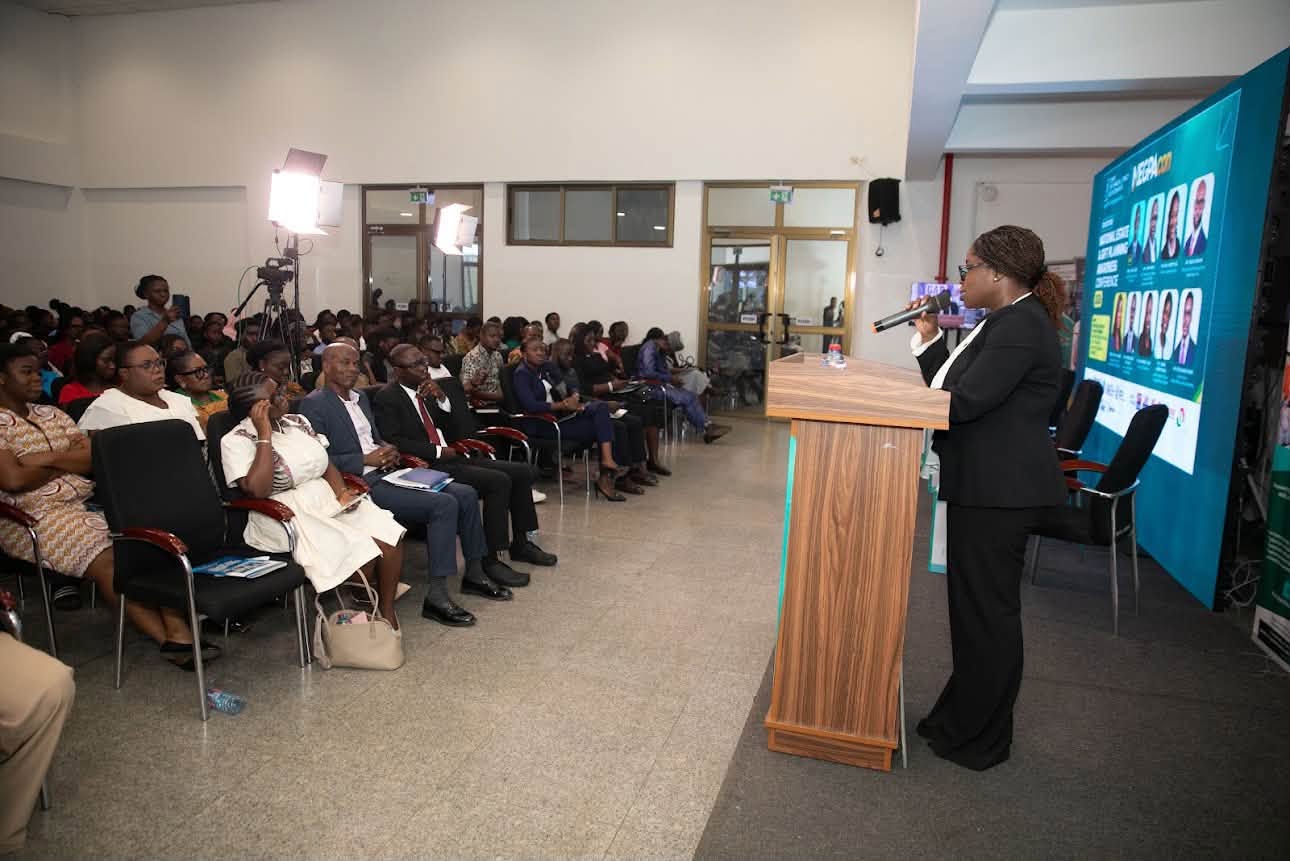
“The greater challenge is ensuring that what has been created is not unnecessarily lost, dissipated or subjected to avoidable legal disputes when circumstances change or when assets pass on to the next generation,” she said.
She urged Ghanaians to make estate planning an integral part of their financial and family arrangements, citing the Wills Act, 1971 (Act 360), and the Intestate Succession Law, 1985 (PNDCL 111), which provide the legal framework for the distribution of estates.