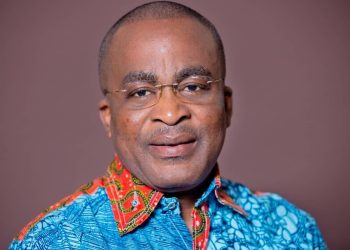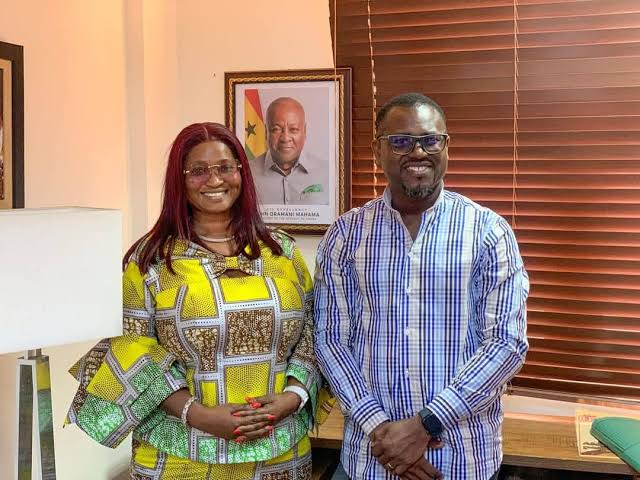
Deputy Chief Executive Officer of the Ghana Tourism Authority (GTA), Gilbert Abeiku Aggrey, popularly known as Abeiku Santana, has petitioned the Minister of Tourism, Culture and Creative Arts, Abla Dzifa Gomashie, over difficulties accessing the authority’s Chief Executive Officer, Maame Efua Houadjeto, for official consultations.
In a letter dated October 22, 2026, Abeiku Santana, who is responsible for Marketing and Special Duties, asked the minister to intervene in what he described as recurring challenges in securing timely meetings with the CEO on urgent operational matters.
Mr Aggrey said he had repeatedly sought meetings through the CEO’s secretary or personal assistant but was informed that she was unavailable.
“On several occasions, I have had to request meetings through the CEO’s secretary or personal assistant, only to be informed that she is unavailable,” he stated in the letter.
He said the situation had made it difficult to obtain timely guidance, approvals and decisions required to carry out his responsibilities effectively.
“This situation sometimes causes delays in operations, stakeholder engagements, and the implementation of key assignments,” he wrote.
The deputy CEO acknowledged the demands on his superior’s schedule but argued that the recurring difficulty had created a communication gap requiring attention.
“My intention is not to make a personal complaint, but to highlight a communication gap that needs to be addressed in the interest of effective management and institutional efficiency,” he stated.
He appealed to the minister, with the knowledge of the GTA Board Chairperson, to establish a more effective communication and consultation arrangement between the two offices, particularly regarding urgent official matters.
Mr Aggrey also reaffirmed his commitment to working professionally with the CEO and the authority’s management team to advance the ministry’s objectives and improve the GTA’s performance.
CEO expresses surprise and disappointment
But in a response dated October 24, 2026, and addressed to the Chairperson of the GTA Board of Directors, Ms Houadjeto disputed the account of her availability presented by her deputy.
“I am surprised and disappointed that the letter does not reflect the true state of my availability to you as my Deputy Chief Executive Officer,” she asserted.
The CEO maintained that she operated an open-door policy, particularly for executive and senior management officers, to facilitate effective communication and the smooth administration of the authority.
She nevertheless acknowledged the importance of timely consultations and decisions, especially on matters relating to domestic tourism, special events, marketing and other responsibilities assigned to the deputy CEO.
She also recognised the need to address communication gaps that could impede the execution of official assignments.
Houadjeto proposes five measures
To address the concerns, Ms Houadjeto proposed five measures to strengthen internal communication and improve coordination among the authority’s executive management.
These include scheduled meetings between the CEO and deputy CEO to review departmental priorities, operational challenges and matters requiring executive direction.
She also proposed a clear procedure for flagging urgent matters, including escalation channels where scheduled consultations are not possible.
Other measures involve ensuring that meeting requests are properly communicated, acknowledged and scheduled, clarifying delegated responsibilities and approval processes, and encouraging regular engagement among members of the executive management team.
Explaining the rationale behind the proposals, she said: “I wish to emphasise that the objective of these measures is not merely to address individual concerns, but to strengthen the overall effectiveness of our management processes and promote a more responsive, coordinated, and results-oriented institution.”
Ms Houadjeto further stressed the importance of professionalism, mutual respect, accountability and collective responsibility in the management of the authority.
She said she valued Mr Aggrey’s contribution and expected both offices to continue working together constructively.
“Differences in schedules, operational demands, or administrative processes should not become impediments to the effective performance of our collective responsibilities,” she added.
The CEO proposed a meeting at the earliest mutually convenient opportunity to agree on practical arrangements for implementing the measures.