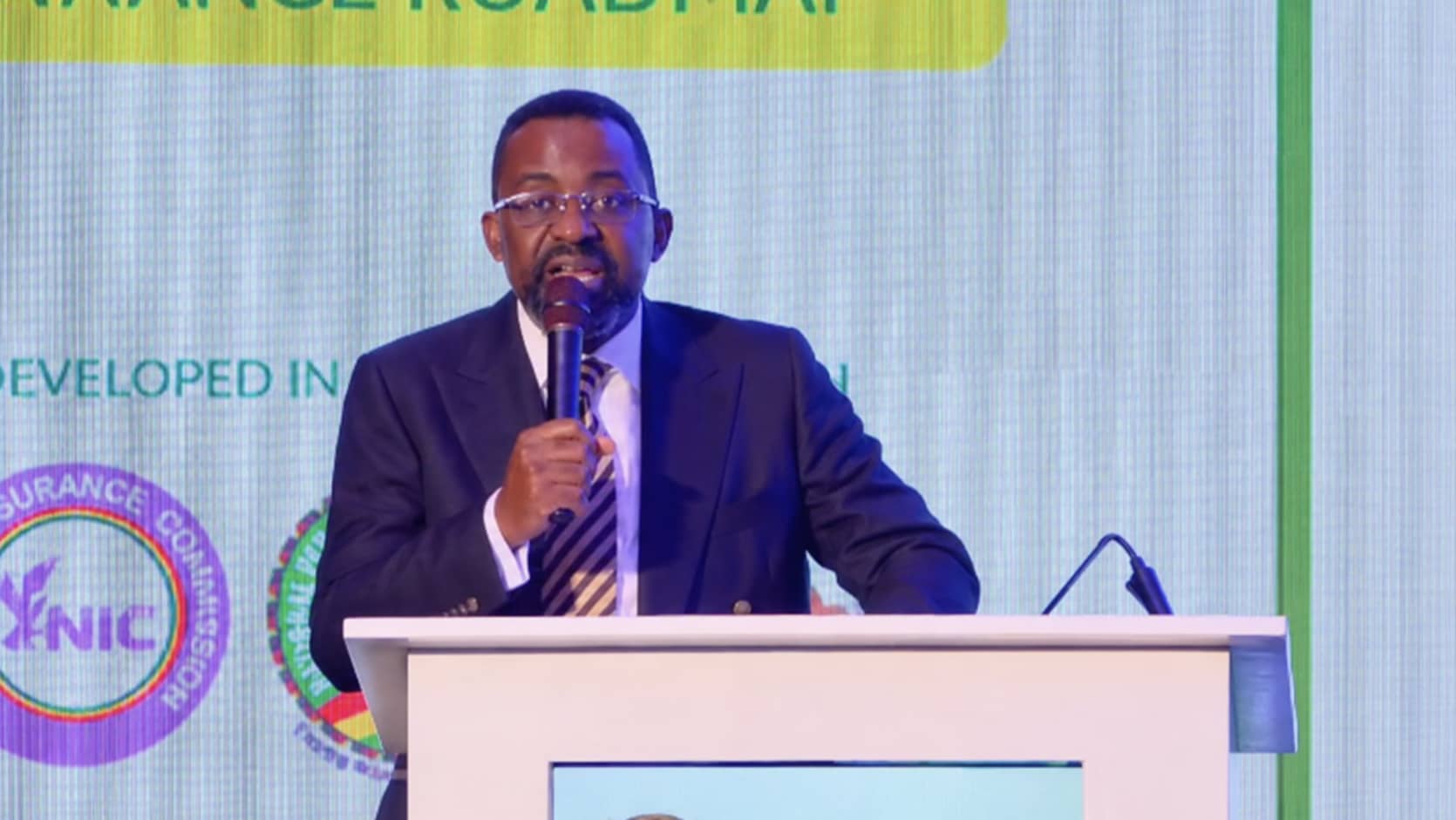
The Bank of Ghana (BoG) has launched a new Sustainable Finance Roadmap aimed at strengthening the resilience of Ghana’s financial sector, improving the management of climate-related risks and positioning the country as a leading destination for sustainable investment in Africa.
Speaking at the launch in Accra on Tuesday, June 30, 2026, Governor Dr. Johnson Pandit Asiama said the initiative marks a significant milestone in Ghana’s efforts to build a financial system capable of supporting long-term economic growth while responding to emerging environmental and social challenges.
He noted that sustainable finance has become increasingly important to financial stability and economic resilience as global investors place greater emphasis on environmental, social and governance (ESG) standards.
“Sustainable finance is increasingly central to financial stability, to long-term investment, and to economic resilience. It is reshaping where global capital flows and what investors expect of financial systems,” Dr. Asiama said.
The Governor observed that climate change is no longer a distant concern but a present reality with direct implications for Ghana’s financial system, citing recent floods across the country as evidence of the growing economic risks posed by extreme weather events.
According to him, climate-related shocks affect the value of assets, insurance claims and lending security, making it necessary for financial regulators to rethink how risks are supervised, priced and managed.
“Responding to these challenges is not simply an option – it is a responsibility we owe to our nation and to generations yet to come,” he stated.
Dr. Asiama stressed that addressing sustainability risks requires collaboration among Ghana’s financial regulators, including those overseeing banking, insurance, pensions and securities, because such risks cut across the entire financial system.
The Roadmap, he explained, provides a common framework that aligns the efforts of all financial sector regulators and is built on three key pillars: Environmental, Social and Governance (ESG) Integration, Climate-Related Risk Management, and Financing Sustainability.
He said the framework outlines practical actions to help regulators anticipate emerging risks while unlocking new opportunities for inclusive and sustainable economic growth.
The Governor highlighted the Bank of Ghana’s decade-long journey towards sustainable finance, beginning with the establishment of a multi-stakeholder committee in 2015 that eventually led to the adoption of the Sustainable Banking Principles in 2019.
He noted that all 23 commercial bank chief executives voluntarily endorsed the principles, committing their institutions to integrate sustainability into governance, risk management and business operations.
With support from the International Finance Corporation (IFC) and the Swiss Secretariat for Economic Affairs (SECO), the Bank later introduced a compliance framework, with industry compliance reaching an average of 73 percent by September 2025. In 2024, the central bank also introduced its Sustainability and Climate-Related Risks Strategic Plan and a Climate-Related Financial Risk Directive to strengthen the sector’s preparedness.
Beyond managing risks, Dr. Asiama said the Roadmap is intended to help Ghana mobilise private and institutional capital, expand green and blended finance, and position the country as a regional hub for sustainable finance.
“Sustainable finance is not only about managing risks. It is also about positioning Ghana to access new pools of global capital, to finance critical infrastructure, to support the energy transition, to deepen our financial markets, and to strengthen long-term growth,” he said.
He added that while the launch of the Roadmap is a major achievement, its ultimate success will depend on effective implementation.
“The roadmap we launch today is an important milestone, but its success will be measured by what we do next. Let us therefore carry it forward with the same spirit of partnership that brought us here, and build a financial system that is more resilient, more competitive, and better prepared for the future,” Dr. Asiama said.
The Sustainable Finance Roadmap was developed through collaboration among the Ministry of Finance, Bank of Ghana, National Insurance Commission, National Pensions Regulatory Authority, Securities and Exchange Commission, Institute of Chartered Accountants, Ghana, Chartered Institute of Bankers, with technical support from the IFC, SECO and the Sustainable Banking and Finance Network.