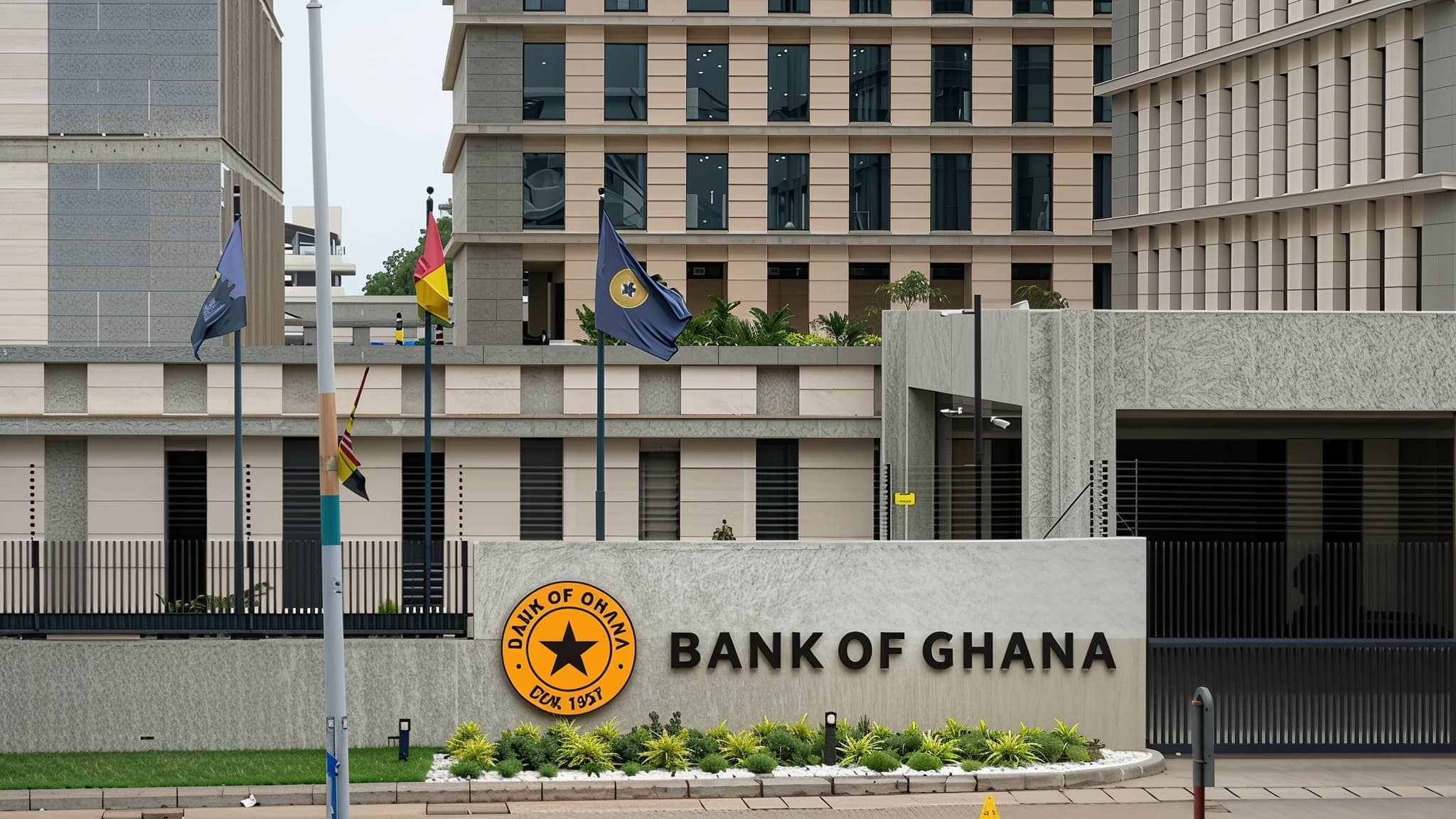
The Bank of Ghana (BoG) has published its 2025 financial statements, revealing a deeper annual loss position and a further widening of negative equity, even as it maintains improved capacity to support monetary policy operations without direct government financing.
For the year ended December 31, 2025, the central bank recorded a net loss of GH¢15.63 billion, up from GH¢9.49 billion in 2024.
The deterioration in the financial outcome has been largely attributed to the lingering impact of Ghana’s domestic debt restructuring programme, which continues to affect balance sheet valuations and financial performance.
Despite the widening losses, the Bank maintains what it describes as a strong “policy solvency” position, an internal measure of its ability to fund monetary policy operations such as liquidity management and inflation control.
Negative Equity Deepens
The negative equity position of the Bank and its subsidiaries also worsened significantly. Total equity declined further into negative territory, widening to GH¢93.82 billion in 2025 from GH¢58.62 billion in the previous year.
Total assets were reported at GH¢231.63 billion at the Bank level and GH¢237.23 billion at Group level, reflecting the scale of the institution’s balance sheet despite accumulated losses.
Policy Solvency Shows Improvement
In contrast to the overall financial position, the Bank reported a marked improvement in its operational performance indicator. Policy solvency rose sharply to GH¢5.50 billion in 2025, compared to GH¢793.54 million in 2024. This improvement was supported by stronger income from reserve management operations and a significant GH¢9.57 billion net gain from the sale of refined gold.
Total operating income increased to GH¢22.28 billion from GH¢9.40 billion in 2024, while the cost of open market operations also rose to GH¢16.73 billion from GH¢8.60 billion over the same period. The Bank noted that despite higher costs, operational income growth helped strengthen its policy implementation capacity.
Gold Strategy and Capital Restoration Plan
A key pillar of the Bank’s strategy remains its Domestic Gold Purchase Programme (DGPP), introduced in 2021. The programme has enabled the accumulation of gold reserves locally, strengthening foreign exchange buffers and reducing pressure on the cedi. The Bank also continues to rely on gold-related gains as a stabilising factor in its broader financial strategy.
To address the weakened equity position, the Bank has entered into a Memorandum of Understanding with the Ministry of Finance for a phased recapitalisation programme spanning 2026 to 2032. The plan is expected to restore positive equity through structured government support in cash or financial instruments. Complementing this effort, the Bank of Ghana Act was amended in 2025 to raise the minimum authorised capital from GH¢10 million to GH¢1 billion, reinforcing its long-term institutional strengthening agenda.
Recovery Hinges on Fiscal Discipline
Looking ahead, the Board of Directors maintains confidence in the Bank’s going concern status, projecting a return to positive net equity by 2032. This outlook is however dependent on sustained disinflation towards the 6–10 percent target band, strict adherence to a zero monetary financing policy for government spending, and timely implementation of the recapitalisation programme.
The Bank has also flagged key risks to the recovery path, including potential delays in government recapitalisation payments, exchange rate volatility, and slower-than-expected disinflation.
Despite the significant “accounting losses”, the Bank of Ghana maintains that its operational policy framework remains intact as it navigates the long-term effects of debt restructuring.