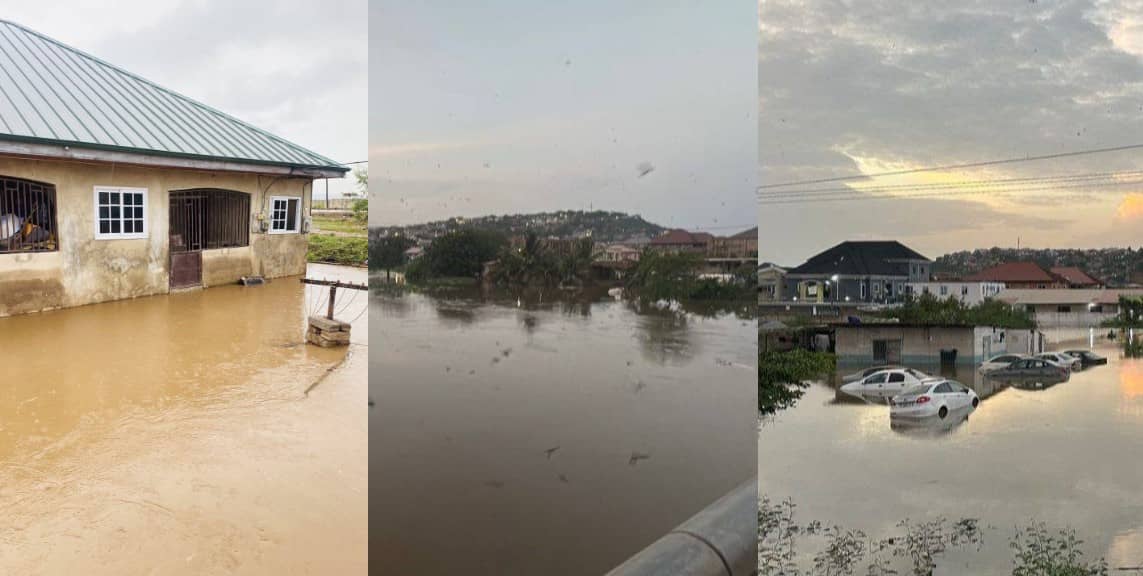
Hundreds of homes in parts of Weija in Accra have been submerged following a controlled spillage of the Weija Dam, leaving thousands of residents stranded and forcing many to flee to safer grounds.
The flooding comes after Ghana Water Limited (GWL) announced the release of excess water from the dam as rising water levels exceeded safe operational limits, heightening fears of a possible overflow.
According to the utility company, water levels at the dam rose above 48 feet, compelling authorities to open all spill gates to safeguard the structural integrity of the facility.
GWL explained that the controlled spillage forms part of standard safety procedures during periods of heavy rainfall when inflows into the dam increase significantly.
Several downstream communities have since been inundated, with floodwaters sweeping into homes, rendering some roads impassable and forcing residents to salvage belongings while seeking temporary shelter in safer areas.
The National Disaster Management Organisation (NADMO) is to scale up relief efforts as authorities continue to assess the extent of destruction and displacement caused by the flooding.
The latest incident follows earlier warnings issued by GWL to residents living in downstream communities including Tetegu, Oblogo, Lower Weija, Bojo Beach, Pambros Salt and nearby areas to relocate ahead of the spillage.
The Weija Dam, situated on the Densu River, remains one of Ghana’s most important water infrastructure facilities, supplying a significant portion of potable water to Accra and surrounding communities.
However, historical records show that spillages from the dam have repeatedly resulted in flooding in downstream communities, particularly during periods of intense rainfall.