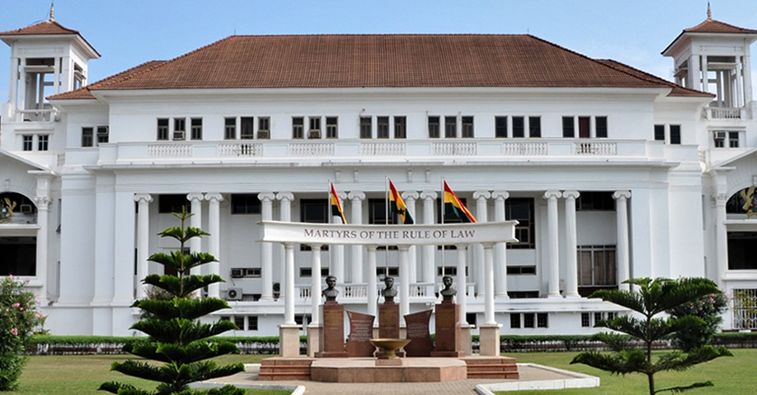
Political parties in Ghana face a major change in how they select candidates for presidential and parliamentary elections after the Supreme Court ruled that delegate-based primaries are unconstitutional.
The seven-member panel, chaired by Chief Justice Paul Baffoe-Bonnie, ruled by a 5-2 majority that limiting participation in party primaries to selected executives, officeholders and delegates violates Article 55(5) of the 1992 Constitution.
The Court held that every member in good standing of a political party must have the opportunity to participate directly in choosing the party’s presidential and parliamentary candidates.
The ruling followed a legal challenge brought by Prof. Kwabena Frimpong-Boateng, Dr Nyaho Nyaho-Tamakloe and Dr Christine Amoako-Nuamah, who argued that delegate-based primaries exclude ordinary party members from key electoral decisions.
In its determination, the Court found that the delegate system creates a limited electoral market that could be susceptible to money politics. It said opening internal elections to all eligible members would strengthen political participation, accountability and constitutional democracy.
The Court also affirmed that the Electoral Commission has a statutory responsibility to ensure that political parties conduct their internal activities in accordance with Article 55(5).
Political parties have consequently been directed to abandon the delegate system and establish arrangements that allow all eligible members to vote in their primaries within one year of the judgment.
However, the Court clarified that decisions, appointments and other actions lawfully taken under the previous system before the ruling remain valid and will not be invalidated solely by the judgment.
The full reasons for the decision are expected to be filed by August 5, 2026. Two justices, Samuel Kwame Adibu-Asiedu and Ernest Yao Gaewu, dissented.