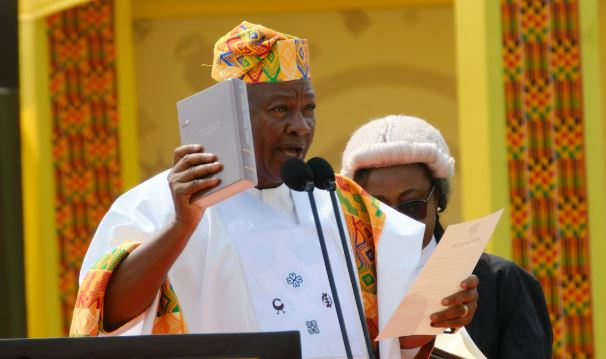
President John Dramani Mahama’s approval rating has risen to its highest level in the regular tracking polls conducted since 2020, even as many Ghanaians continue to identify unemployment, the economy and intermittent power supply as key areas where the government is underperforming.
According to the June 2026 National Tracking Poll by Global InfoAnalytics, 71 percent of respondents approve of the president’s performance, up from 67 percent recorded in March. Twenty-three percent disapprove, while six percent expressed no opinion.
The poll, conducted between May 30 and June 12, sampled 8,784 voters across all 16 regions and 84 constituencies and had a confidence level of 99 percent with a margin of error of ±2.5 percent.
The findings indicate broad support for the president across the country. Regional approval ratings ranged from 40 percent in the Ahafo Region to 86 percent in the Savannah Region, with Greater Accra recording 73 percent and the Ashanti Region registering 55 percent approval.
Support for the president was strongest among National Democratic Congress (NDC) sympathizers, 91 percent of whom approved of his performance. Among floating voters, 65 percent expressed approval. However, supporters of the New Patriotic Party (NPP) were more divided, with 37 percent approving and 54 percent disapproving.
The poll also found that 66 percent of respondents believe Ghana is headed in the right direction, compared with 27 percent who think the country is moving in the wrong direction.
Similarly, 57 percent of respondents said their standard of living had improved compared with a year ago, while 16 percent said conditions had worsened and 23 percent reported no change. Another 68 percent expressed optimism that their living standards would improve over the next 12 months.
On corruption, 54 percent said the situation had improved, while 62 percent believed the government was doing enough to tackle the problem. Respondents also viewed ministers and government officials, the presidency and the military as among the least corrupt institutions in the country.
Despite these positive assessments, respondents identified several areas where the government is falling short.
The survey found that employment was considered the weakest area of government performance, with 44 percent of respondents citing it as a concern. This was followed by the economy at 32 percent and the issue of power outages, popularly known as dumsor, at 29 percent. Concerns were also raised about the fight against illegal mining, the implementation of the 24-hour economy policy and the cost of living.
Employment and the economy also emerged as the two most important issues for voters. Fifty-four percent identified jobs as a key concern, while 51 percent pointed to the general economy. Cost of living, education, roads, healthcare and corruption were also among the issues highlighted by respondents.
Although dumsor featured among the perceived areas of poor performance, a majority of respondents—56 percent—said they were satisfied with the government’s handling of the power situation, while 26 percent expressed dissatisfaction.